Monday, October 11, 2010

CEW-IT GENESIS


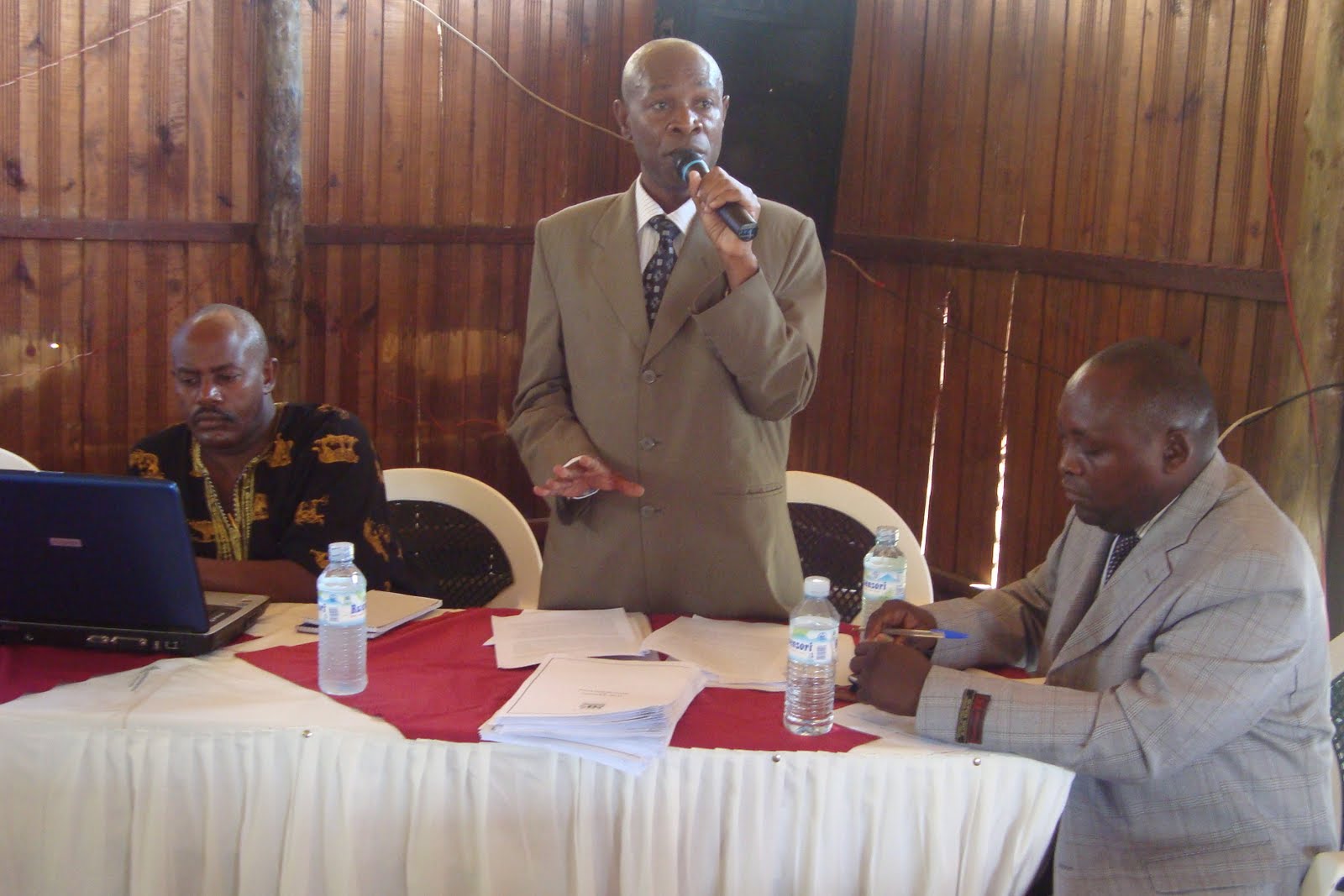
Photo of some participants at CEW-IT workshop in Kampala 4th-5th October

RWECO
made up of six organisations from the Rwenzori region:(Karambi Action for Life Improvement (KALI), Integrated Women Development Programme (IWDP), Goodhope Foundation for Rural Development (GHFRD), Rwenzori Information Centres Network (RIC-NET), Kabarole Research and Resource Centre (KRC) and Rwenzori Anti-corruption Coalition (RAC)); have joined PAC (from Teso), CEFORD (from West Nile) and ACORD (from Gulu) to participate actively in the election process and amplifier the citizens contributions towards election monitoring. This joint effort is named Citizens Election Watch – IT (CEW-IT).
A Memorandum of Understanding has been signed among the four regional organizations and an Advisory committee to coordinate the effort has been set up. This committee includes both representatives of HIVOS and Oxfam Novib in addition to the representatives of member organization.(Photo of Members of CEW-IT advisory Committee)

Tuesday, October 5, 2010

EC message to CEW-IT


CEW-IT workshop on election observation was addressed by Mrs Nawe Molly Kamukama, head of the Voter Education and Training Department.
In her speech, she stress the following issues:
The Ugandan electoral process is based on the law. Administratively, the electoral Commission (EC) does not have much leeway apart from what is stated in the law.
EC is supposed to accredit CSOs and CBOs who are interested in voter education and are self-financing. EC accredits them to conduct civic education.The broader mandate for civic education is with Uganda Human Rights Commission.
The law limits civic education to voter education around elections period.
In preparation for the 2011 general elections,65 organizations have been accredited based on the criteria set by the electoral commission and after verification with the NGO board. Trainings have been provided to the observers as well information materials for use. CCEDU is one of those organisations that have been accredited.

The commission monitors the CSOs based submitted work plans and signs Memorandums of understanding with all accredited organisations.

The commission carries out its own civic education although most of the education being carried out during election period is voter education or information. Government of Uganda and development partners fund the civic education department. For civic education, the country is divided into 4 regions contracted out to consultancy firms to distribute EC materials developed, train people and carry out logistics.

Election observation and monitoring
The laws do not allow anybody except an election administrator to monitor elections therefore that person should be authorized by the EC or should have managed elections before. A monitor has the authority to intervene and correct an anomaly when something is going wrong in the process.
The law here allows for election observation by CSOs. CSO are allowed to observe and not intervene in the election process. A CSO has to apply to get accredited and must give a report at the end of the exercise. Some CSOs have worked with the commission through projects to carry out certain activities for example, the international Public institute carried out dialogues with EC and political parties to build the relationship between opponent parties and EC.
The commission is using information Technology. There is an electronic national voters’ register with bio data for 5 million citizens. The register can be accessed online. (http://www.ec.or.ug). This has been facilitated by USAID. In the future, citizens shall be able to query the commission database via text message to get their voter details and also receive voter information. An electronic tally system funded by DDP shall be put in pace for elections in 2011.

CEW-IT Workshop Sharing objectives: Learning from day I

Sharing objectives: Learning from day I, to be used to refine a Roadmap for Election Monitoring, and for Mapping Synergies between Stakeholders.

Key Learning Points for consideration:

Citizen Manifesto – by NGO Forum (Arthur Larok)
Putting citizens at the fore of shaping the agenda of politicians and the political systems for which politicians and government should be working for
• The role of (political) history of Uganda and the EA region in explaining the way our politics is and therefore the need for things like the citizens manifesto to correct some of the anomalies from history.
• Civic education and not just voter education. It is empowerment of the citizens to make their leaders more accountable.
• The process needs to be owned by the citizens with real voices and not assumed voices.

Report from Uchaguzi (Kenya) – CRECO and SODNET
CRECO – by Salome Nduta
A description of the process followed by Uchaguzi (during the recent Kenya referendum), which brought out the need for clear planning especially on the polling day for the morning and closing peak times when most information is received. Other Learning Points captured include:
• Central distribution of airtime to observers brought hiccups in the process especially where network coverage was poor.
• Even with the use of technology as the key tool in the observation process, it is important to maintain other ways of monitoring and reporting incidents to counter issues that arise for example, when presiding officers in Kenya refused some observers to use their phones during the observation process.
• Have a strategy for issues arising: Focal points with key institutions should be set up to help escalate and remedy issues arising from field reports, for example the IIEC focal point who worked with CRECO to sort out the issues arising from observers not being able to use their mobile phones at polling stations.
SODNET – by Philip Thigo
• The importance of an organisation with experience in monitoring to take the lead in coordinating the process.
• The “how to” card that standardises the reporting on incidents from observers.

Uganda Elections: Interaction between EC and Monitoring CSOs – by CCEDU (Gwada Ogot)
It is important to work with the Electoral Commission in civic and voter education, and election monitoring. The commission carries the mandate however you think of that mandate. Civil organisations need to have a working relationship that is not antagonistic. For example, the law in Uganda gives the mandate to EC to accredit organisations for the monitoring process and approve all messages going out in regards to civic and voter education.

Other related Platforms – by Appfrica Uganda, and Makerere University
Appfrica – by Matthew
• There are ICT tools that can be used to complement the process of election monitoring and in some instances to aid the efficiency of the process. “Swiftriver”, is a tool to be used by the management of information that comes in from observers.
Makerere University – by Simon Peter Muwanga
• “OpenXdata” tool gives information gatherers mobile based way to collect predefine information.

Uganda Election Platform: - by DEMgroup and NDI (Heather Kashner, Jackie Mugisha and Reinier Battenberg)
A platform – Ugandawatch2011 - has been launched for election monitoring for Uganda in 2011 by DEMgroup. A structure has been set up, which started with the voter registration and display exercise and is now going into the campaign stage and finally the polling day itself. Technical description of the platform and its application procedures and processes was presented.

Tanzania Election preparations – by TECCO/LHRC (Ezekiel Massanja)
There are advantages in having a loose network (coalition) when working as opposed to a structured (public sector?) organisations which may lose its membership.

ICT and Elections: The Top Ten Election Applications by Mountbatten (Reinier Battenberg)
The use of the 10 tactics in mapping and drawing the roadmap for civil society organisations for Uganda’s 2011 elections.


Abbreviations

CCEDU Citizens Coalition for Electoral Democracy in Uganda
CEWIT Citizens Election Watch IT
CRECO Constitutional Review and Education Consortium
DEMGroup Democracy Monitoring Group
LHRC Legal and Human Rights Centre
NDI National Democratic Institute
RWECO Rwenzori Consortium for Civic Competence
SODNET Social Development Network
TACEO Tanzanian Coalition for Election Observation

Monday, October 4, 2010

Kampala Election Process workshop going on.

The workshop on electoral process for Eastern Africa started today at 9.00 am. Participants drawn from CSO in Kenya, Rwanda,Burundi and Uganda together with representatives of funding institutions and organization such as HIVOS, Oxfam Novib, EU participated.
Citizens Election Watch IT (CEW IT) is a coalition that brings together organisations from four regions of Uganda. Rwenzori region, West Nile region, Acholi region and Teso region. The organisations came together to collaborate on election monitoring.

A 2-day workshop on election monitoring was organised with two key objectives:
To map who is doing what in Uganda in the area of election monitoring, find synergies and draw a roadmap for various civil society actors in Uganda.
To share learning and experiences on election monitoring from the East Africa Community region including IT tools usage as an integral part of election monitoring.

Constitutional Review and Education Consortium (CRECO) from Kenya shared its experiences in election monitoring with the use of IT for the just concluded referendum in Kenya. They showed that the use of IT in the monitoring process provided a faster way of receiving information on incidents and disseminating results and information. CRECO shared the need for clear planning and strategies during the whole process of monitoring. A strategy for escalating incidents was set up, which helped CRECO solve challenges on the ground faster thus causing less disruptions to the work on the monitors.

ICT tools that can be used in the process of election monitoring were showcased. Ushahidi platform on which CRECO’s Uchaguzi platform is modelled was shown and explained. The web based platform allows users to visually see data by means of a map on various issues arising around election. Appafrica Uganda demonstrated the use of the swiftriver tool, which can speed up the process of filtering information received from field monitors thus speeding up the display and dissemination of issues arising and results. Makerere University demonstrated a mobile based application for data collection that eases the collection of data in the field.

A citizens manifesto which carries the wishes of the citizens of Uganda shall be launched in October. The manifesto puts citizens at the fore front of shaping the agenda of politicians and the political systems for which politicians and government should be working for.

The importance of working with the Electoral Commission in civic and voter education, and election monitoring was highlighted. Therefore organisations should have a relationship with the commission that is not antagonistic to achieve better outcomes.

The learning and experience shared at the workshop shall provide a background and basis to map activities of the various actors in election monitoring and provide a road map to guide organisations in Uganda in election monitoring for the coming months.

Thursday, September 30, 2010

CITIZENS ELECTIONS WATCH - IT (CEW- IT)

Members in a meeting to agree on the MOU


The members of the civil society under the umbrella of Rwenzori Consortium for Civic Competence – RWECO for short working on issues of election monitoring in the Rwenzori region in partnership with HIVOS; CEFORD and ACORD – working on issues of promoting good governance in West Nile and Acholi regions respectively in partnership with Oxfam Novib; and Public Affairs Centre working on civic empowerment in Teso region in collaboration with Oxfam GB; Have formed a consortium called Citizens Election Watch-IT or CEW- IT in short. This is based on the desire to contribute to building the competence of the grassroots in civic matters and working together so as to strengthen civic participation in the promotion of fairness and transparency in the electoral process in Uganda. CEW-IT Specific Objectives are:
To develop a harmonized approach to enhancing civic participation in the electoral process, decision making, monitoring and information sharing using modern ICT and other pragmatic approaches.
To strengthen advocacy on policy issues in regard to the electoral process in Uganda.
To share resident capacities among the CEW- IT members and sister organizations that do similar work.
To strengthen the citizens’ voice and influence through improved dialogue and engagement between the leaders and their constituencies.
To jointly mobilize and manage resources for the consortium.
To network with other agencies at the regional, national and international level that have similar objectives.
Ultimately, CEW-IT brings on board resources and personnel skills RWECO members such as:Integrated Women Development Programme (IWDP), Good Hope Foundation For Rural Development (GHFRD), Karambi Action for Life Improvement (KALI), Rwenzori Information Centers Network (RICNET), Rwenzori Anticorruption Coalition (RAC) and Kabarole Research and Resource Centre (KRC) ; working in western Uganda. CEFORD, ACORD and PAC working in the Eastern (Teso Karamoja regions ),west Nile region and Northern region.

The above organization have signed an MOU that governs their operation and will deploy over 6000 monitors assistance with 150 IT personnel to ensure that the information the monitors collect is put on web based platforms similar to www.uchaguzi.co.ke or www.rwenzoripeoplesvoice.org

ROUND TABLE MEETING ON THE ELECTORAL PROCESS IN UGANDA AND EAST AFRICA

This is to announce a Round Table Workshop on the electoral process in East Africa with Uganda as a case in point on 4th and 5th October 2010 at Sports View Hotel Kireka starting 8:30am on each day.

Back ground:
The East African Countries are undergoing national elections: the referendum on the new constitution in Kenya in August 2010, General elections in Rwanda in August 2010, General Elections in Tanzania in October 2010, Elections in Burundi in phases from May – September 2010, General elections in Uganda in 2011 and Kenya in 2012. In response, the civic society in these countries is playing an active role in influencing the electoral process through conducting civic and voter education and carrying out a watch – dog role over the polling process. Given the advancement in technology, these civic organizations are increasingly using a mix of both traditional observation and modern web based tools (in particular as developed by Ushahidi) to document and report about the electoral process in these countries. This is being done in partnership with the development partners.

In this spirit Hivos organized a round table discussion in Nairobi in March 2010 that brought together HIVOS partners and other interested parties to map out common interests and concerns; outline possible interventions and strategies; and formulate roadmaps through which each stakeholder could engage in the elections processes.
Of particular importance to the Workshop was appropriate and innovative ways of using ICTs as tools for effective monitoring and management of the elections processes. Our Kenyan colleagues immediately demonstrated the power of this approach. Please see www.uchaguzi.co.ke to get an impression.

As a follow up to the Nairobi workshop another one is being organized in Kampala on 4th and 5th October 2010 at Sports View Hotel, Kireka.http://www.sportsviewhoteluganda.com/

The Kampala workshop will mainly focus on how different stakeholders can coordinate efforts in conducting civic and voter education and observing the elections using modern ICT. This will be with a specific focus on the Uganda 2011 General Elections.

As a precursor to this workshop Hivos and Oxfam Novib partners in Uganda have been consulting different stakeholders in the electoral process in Uganda last week. This consultation was in one way aimed at mapping out stakeholders and what they are doing in preparation for the elections. This is expected to be concretized at the Kampala workshop where clarity on who is doing what and where will be reached.

Participants for the Kampala workshop have been identified from civil society organizations in East Africa, the donor community in Uganda and beyond and the media. Specific focus has been given to organizations and institutions with expertise in applying ICT in the electoral process. A full list of proposed participants is attached.

The detailed programme of the workshop will follow later on.

Participants from outside Kampala will be accommodated at the Sports View Hotel Kireka. Those from with Kampala will be expected to commute to the hotel on each day. All participants are expected to arrange their own transport to the hotel.

Participants from outside Uganda will be expected to arrive at the hotel on the evening of Sunday 3rd October and check out in the evening of Tuesday 5th or morning of Wednesday 6th October 2010 depending on the flight schedule. Reimbursement of the travel costs including air tickets (economy class) and transfers to and from the airport will be made upon presentation of receipts/invoices.

For further details contact:

• Mr. John Silco on +256701607149 begin_of_the_skype_highlighting              +256701607149      end_of_the_skype_highlighting begin_of_the_skype_highlighting              +256701607149      end_of_the_skype_highlighting OR +256772607149
• Mr. James Mwirima on +256772986345 OR +256702986345 OR +256753986345

Please confirm your participation to:

1. mjohnsilco@gmail.com M John Silco
2. cew.ituganda2011@gmail.com Workshop administrator

Map of Sport view Hotel Kireka: http://www.maplandia.com/uganda/kampala/kampala-city-council/kireka/

Thursday, September 9, 2010

RWECO members partipates in referendum observat ion - Kenya


James from RWECO, John Silco from RIC-NET and Crispna from CEDU are some of the Ugandans who participated in joint observation of the referendum in Kenya. By invitation from CRECO, a HIVOS partner organization from Kenya the trio joined a team of East African and European delegates to observe the referendum.
This exercise was designed to act as a pre-test of the regional HIVOS programme for elections and electoral processes monitoring and observation in the region.

At the closure of the exercise the foreigner observation team,HIVO's staff in Kenya and members Kenyan CSO(CRECO,CLARION,COBADES and 4Cs)held a press conference at Serena to give the preliminary report. the general statement was that the observes were to a great extend satisfied with the conduct of the referendum under the Interim Electoral Commission(IIEC).
By the observer team, the following was noted:

On the general, it was observed that the observation was properly organized and that in all areas where the roaming monitors had visited, the observers were present.

The combination of civic education, voter education and observation (complete with ICT) was a very good methodology and that it should be duplicated across the region.www.uchaguzi.co.ke

ICT- the use of text messages from our Observers and the public was splendid. It was observed that we could get more information from the public than our observers. However, the ICT team had to make a call to the senders of the messages or the poll watcher in the neighborhood to verify the message from the public. some reports might just be alarmist or send sms for fun.

There was a good number of manpower manning the command centre, the ICT centre at CRECO for observer's reports and at Ushahidi centre for the Public sourcing.

It was noted that at one time the centre needed more people due to the high number of sms’s coming in at the same time especially between 7.00am-11.00am then 5.00pm-10.00pm.
Some of the salient issues that were raised by observed in the Kenya should be noted by other east African countries with scheduled elections soon.

on the web based platform, it was noted that The reports once approved and posted were not easy to correct - for instance where there was a problem but intervention had been done and the situation had normalized one could not go to the site and update.
Recommendations:
1.The ushahidi tool used in Kenya should be developed and used in Tanzania, Uganda during their coming General Elections.
2.The lessons learned from the short message technology is that in every country, we should go for the bigger established network (like Safaricom in Kenya that CRECO had used) to avoid a technical hitch that normally arise from overcrowding in the network.
3.It was also imperative that we have the numbers for our recruited observers programmed by the service provider, and the software to be made to distinguish the messages from the public and the observers. At the least for our observers, the SMS message should automatically show the name of the observer, the constituency and the polling station.
4.The observation tools used should be localized to the various environments of each country and improved on any aspects that has been missing. A checklist for roaming monitors needs to be developed and availed.
5.Kenya and the Rwandan groups would share the report of the observation with the rest of the members from other countries.
6.Accreditation cards for international observers are usually done early by the electoral bodies and therefore planning has to start early. The visitors should be in the country a week before the election day so as to allow them get acquainted with the electoral process. Partners need to develop and avail information packs to visitors at the point of entry (hotel) for information and preparedness.

RWECO shares election experience with Dutch and Belgium embassy Officers

"Its so beautiful" the coordinator Rweco remarked as RIC-net programme manager Mr.john Silco presented the ICT strategy to the delegates from Dutch and Belgium embassies.The delegates made a visit to Rweco, a consortium of civil society organizations involved in the monitoring of the electoral process.During the meeting with the Delegates, the programme manager RIC-NET revealed the ICT strategy which RIC-net and other RWECO members intends to use in monitoring the electoral process of 2010 to 2011.This strategy will use the Ushandi platform that was used in Kenya during the constitution referendum 2010.This platform allows the citizens and monitors to send short sms to the web that describes incidents happening is a specific place for action by the election commission.later these SMS are used as backup to the final report on whether the elections where conducted in a free and fair manner.
Later, the team of RWECO members and the embassy staff visited places where the RWECO monitors have been participating in election monitoring. The observation report from this field visit can be accessed from RWECO coordinator and RIC-NET.
By Timothy from RIC-NET

Saturday, July 24, 2010

Poor workmanship a cause for water shortage at most protected springs; a case of Kisebere 2 and Kamighanza protected springs.

Poor workmanship has been singled out by community based monitors under KALI and GOOD Hope as major cause for low water flow rate at most of the protected springs in the Rwenzori region. This was revealed in a report by community based monitors in the Rwenzori region. The study which considered protected springs in Kasese, Kabarole and Kyenjojo Districts blamed their poor or non functionality to wrong sitting, shoddy construction works, use of inadequate materials such as sand and cement and poor workmanship. This has negatively impacted the community access to safe and clean water. In some cases the protected springs suffered from lack of maintenance by the users, for instance, some were bushy, muddy and in a state of disrepair. According to the users of the water sources, the poor operation and maintenance of the water facilities is blamed on the failure of the water user committees to account for the funds collected from the communities. They also blame the water authorities at sub county and district level for the slow response to reports about the breakdown and functionality of the water facilities. In some cases the communities blamed the local authorities for not involving the water users in the planning and construction of the facilities citing many cases where there was neither commissioning nor launch of the water facilities. Out of the sampled 80 water facilities in the region, as many as 40 had been constructed but the communities did not know the year of construction nor could they name the contractor.

In brief the non functionality of water facilities in the Rwenzori region can be attributed to factors such as Poor system designs, O & M Issues, Non-functionality and Non-existance of WUCs, Failure to pay user fees, Failure by the Local authories to comply incase they are reported to Low civic competence.

However, the study by the monitors gives hope on the situation of water in the region. It notes that all sub counties along the Rwenzori Mountain ranges still have safe water in spite of the general global warming. It also notes that the faulty gravity flow schemes and protected springs can be repaired; and most of the water sources protected can still act as sources for Gravity Flow Schemes.

The monitors also note that there is misallocation of resources for instance the rain water harvesting tanks in schools. Cases inpoint cited include Hamukungu, Kanyatsi, Katholhu and Kiraro primary schools that have rain harvesting water tanks but have not made use of them because of failure to fix gutters. In some cases the rain harvesting water tanks have remained dumped and unutilized as is the case of Kikorongo roadside market in Kasese District for as long as four years. This is inspite of the fact that there are some more desrving schools and institutions that are water stressed but have no rain water harvesting tanks. In otherwords in some of the schools there is plenty but negligently unutilized while in others there is completely nothing.
By Timothy Balikenga

TEACHERS IN KABAROLE DECRY THE EDUCATION ACT OF 2008

Head Teachers in Kabarole District have called for a review of the Education Act of 2008 arguing it is very restrictive and imposes a challenge to them in delivering Education service at their primary schools. This was at a public dialogue meeting where RWECO, through IWDP, was presenting findings of monitoring the delivery of service in the education sector in the districts of Kabarole, Kasese and Kyenjojo. The report pointed out a number of lapses in the implementation of the Universal Primary Education policies in the primary schools in the region.

According to this report the key issues in the delivery of primary education are School management systems which are still below the expected standards,The School Managment Committees have not executed their mandate as expected, there is a growing concern on the levels of absenteeism of the pupils and teachers, there is inadequate supervisory mechanisms which are needed to improve school performance, there are high drop out rates especially in hard – to – reach and hard-to-live areas which need to be addressed urgently, poor hygiene and sanitation of both pupils and the facilities and inadequate and poor quality facilities in the schools. These have resulted into poor performance in most schools, the majority of those surveyed having not had any first grade in Primary Leaving Examinations over the last three years.

In response the headteachers concurred with the monitors’ findings but quickly apportioned blame to the inadequate resources and the unrealistic expectations of the govenment and education other stakeholders. They particularly singled out the Education Act of 2008 which they said was unrealistic. They reported that they had written memoranda to the relevant authorities challenging sections of the act which they were not comfortable with but, to their chagrin, had not received any repsonse. The head teachers therefore called upon RWECO to engage with the legislaters from the Rwenzori region to demand for amendment of the 2008 education act. It was resolved that the headteachers, through a meeting convened by the teachers association, should point out areas that need amendment and make proposals. RWECO was asked to facilitate this process.

At the same dialogue meeting it was observed that while government was doing its best, there was still a challenge of political pronouncements that were negatively impacting the spirit of local contribution by parents. Another challenge was that of poor mobilization by some head teachers and school management committees who have failed to raise resources for classroom construction and provision of other facilities. It was resolved that a massive awareness campaign of all education stakeholders be undertaken through the radio and other approriate channels by IWDP and others.

KABAROLE DISTRICT RESOLVES TO CRACK DOWN ILLEGAL DRUG SHOPS

Drug shop operators in Kabarole District have been put in the spotlight. This follows a revelation that their shops are being used as outlets for medicines suspected to be stolen from government health centres. This revelation was made by the Assistant Health Inspector of Ruteete Sub County (NAME) at a public dialogue meeting at Gardens Restaurant in Fort Portal Municipality that was organized by Rwenzori Consortium for Civic Competence.


The dialogue meeting was held to discuss the findings of the monitoring exercise conducted by Integrated Women Development Programme and the community based monitors. At this meeting the health Inspector revealed that he had exposed and led to the arrest of one drug shop operator in Kasenda Sub County who was found selling government labeled drugs in his shop. When the said drug shop operator was searched he was found to have a license with names different from those on the operating permit issued by the Sub County Authority. Mr. ----, the Health Inspector, revealed that when Mr.------, the drug shop operator was interrogated about his source of the government drugs, he revealed that he buys them from ‘patients’ who pick them from the public health centres.
Medical workers participating in the dialogue revealed that as soon as the health centres receive medical consignments many community members fake sicknesses and come for treatment. However, most of the health centres lack laboratory services that would aid the medical workers to carry out proper examination and so they have to base their diagnosis on the patient’s history, which in most cases is inaccurate. The medical workers also revealed that according to their professional conduct they cannot deny a patient medical attention. Therefore, they end up dispensing drugs even to people who may not actually be sick. Some of these people, it was revealed keep the drugs in their homes awaiting when a family member or neighbors will fall sick so they can be treated and others sell them off to the many drug shops in the area. The general opinion was that community people have resorted to such acts due to the inadequate and unreliable medical stocks in the public health centres.

Participants at the public dialogue urged Kabarole District Local Government to crack the whip against the illegal drug shops which were reported to be in their majority in most of the sub counties with Ruteete taking the lead. It was also revealed that most of them are operated by quack medical workers and are actually operating without licenses from the National Drug Authority but only operating permits issued at Sub County sometimes under the influence of politicians. It was also revealed that the District Assistant Drug Inspector has either not performed his role of carrying out periodical inspection or could have been compromised.

The problem of quack medical workers but operating under permit of the sub counties was found to be wide spread not only in Kabarole but in Kasese (and other districts) as well.
(Picture of illegal drug shop license in Nyakiyumbu)
The participants in the dialogue meeting agreed that the District Health Officer, through the Sub County Chiefs, is to make available a list of the licensed drug shops operating in each of the sub counties with clear details of the names and qualification of the operator. The community based monitors and IWDP were asked to work closely with the sub county and district authorities to monitor the operations of the drug shops and expose any cases of quackery and sale of labeled and or un permitted drugs. In conclusion the Kabarole District Local Government was asked to mount an operation against illegal drug shops and their operators with immediate effect.
By Timothy Balikenga information officer

KASESE DISTRICT INTEGRITY PROMOTION FORUM GAINS ROOT


It all started in May 2009 with a sensitization workshop of the District Local Government staffs and elected leaders by the Directorate of Ethics and Integrity in the Office of the President. RWECO took to facilitate the process by mobilizing stakeholders and providing the logistics
The Resident District Commissioner Kasese hosted the event. From the then the Kasese District Integrity Promotion Forum was born. It is a replica of the Inter Agency Forum at National level that brings together all actors involved in the accountability and good governance sector. The Kasese District Integrity Promotion Forum (DIPF), chaired by the RDC with the Chief Administrative Officer as the secretary, brings together accountability and good governance actors in the District who include the Office of the Resident District Commissioner, the District Internal Security Office (DISO), the Police, Criminal Investigations Department, the District Executive Committee, the District Technical Planning Committee, the District Public Accounts Committee, the Chief Magistrate, the Resident State Attorney, the Office of the Auditor General, the Regional Inspectorate of Government, the Private Sector, the Civil Society Organizations, the Cultural Institution and the Religious Leaders.
Government should stop shooting wide in fighting corruption while missing the corrupt people
The DIPF sits quarterly to review the state of enhancing ethical conduct in the delivery of services and how acts of corruption are being addressed by the various stakeholders. Since inception the DIPF has had three meetings, the latest being the one that was held on 9th July 2010, which was the third.
This 3rd DIPF meeting was co-funded by the Kasese District Local Government and the Rwenzori Consortium for Civic Competence (RWECO). The meeting had four main objectives, which were: to sensitize the members about the national anti-corruption strategy and the new anti-corruption laws; the District Strategy to Fight Corruption; Review of the progress of the DIPF; and a scan of the ethical conduct in the delivery of social services at the grassroots. The meeting was graced by among others the heads of the various religious sects in the District, members of the District Technical Planning Committee (Heads of Department and sections), the District Executive Committee, the Resident State Attorney, the Criminal Investigations Department (anti-corruption desk), the Private Sector and Civil Society organizations. Various papers were presented and discussed and a way forward hammered.

The first paper on the National Anti Corruption Strategy (NACS) was presented by Mr. Kenneth Kauta, the Principal Ethics Officer in the Directorate of Ethics and Integrity. He presented a synopsis of the national anti-corruption strategy and the efforts at national level to address the problem of corruption. He highlighted one of the key achievements has been the introduction of the anti-corruption court which has successfully prosecuted corruption cases including grand corruption ones. He also sensitized the meeting on the anti-corruption act and the whistle blowers act. These two acts left a deep impression on the members of the DIPF. One of them, Rev. Fr. Expedito Masereka, remarked that with these new laws, no one is spared of corruption, not even the pope. It was generally agreed that the new laws had widened the net to also include corruption in the private sector, which had hitherto not been expressly covered in the existing laws. However, doubt was cast about the willingness and capacity of government to enforce these laws. For instance, the Bishop of South Rwenzori Diocese, the Right Reverend Jackson Thembo Nzerebende, noted that government was shooting wide and missing the targets, which are the corrupt people.

He noted that the corrupt are well known but government has not done enough to bring them to book. He advised that it may necessary that government studies the tactics used by the corrupt to evade the law so the same can be used to catch them (corrupt).
In his presentation the RDC reviewed the progress of the DIPF and reminded the members of its terms of reference. He noted that the fight against corruption requires more than participation but actual involvement. He used the analogy of an animal farm.
The fight against requires more than participation but actual involuement
At that farm all the animals agreed to throw a party in honour of their master. They drew up a menu that included eggs, milk, and meat, among others. However, when it came to the actual implementation of the menu, some of the animals realized that whereas some were to participate by providing milk and eggs, others were to be directly involved by providing meat, which meant losing their lives. Those that were to be involved declined to participate in providing for the menu. The RDC therefore noted that in the fight against corruption what we need is real involvement not just participation. And this means losing what is so precious to us, for instance money and position (that are not earned!!). This left members of the DIPF shifting unsettled in their chairs.
The Assistant CAO, who is also the District Focal Point Person for Good Governance and Anti-corruption, Mr. Mutungwanda Johnson, presented the local government anti-corruption strategy. In this strategy he emphasized that heads of department at the district are required to form a Steering Committee of five members, one of whom is from civil society, which is charged with the responsibility of ensuring that no corruption is taking place in their respective departments. Besides, each head of department is required to make a report quarterly on what efforts his/he department has put in place to address the problem of corruption. The strategy also requires the district to put up a suggestion box at the district headquarters the keys to which are to be kept by the CAO and one by the member of the civil society. At the time of opening the suggestion both the CAO and civil society member must be present and the issues found therein addressed by the Steering Committee. The strategy requires that this should also be replicated at the sub county level. It was noted that for this strategy to work more successfully, there is need to link the local government’s proposed efforts to those of civil society which already exist. For instance, RWECO already suggestion boxes and notice boards at sub county level in most of the sub counties in Kasese District. All that is needed is a joint coordination between RWECO and the sub county and district local government to sensitize the people to use the notice boards and the suggestion boxes.

As part of the effort to expose unethical conduct and other weaknesses in the delivery of basic services to the communities RWECO presented findings of its monitoring efforts. It emphasized that this expose is one of the roles civil society has to play in addressing bottlenecks in the delivery of social services. Bottlenecks in poverty alleviation include among others corruption. Mr. Mwirima emphasized that one of the causes of corruption is failure by office holders to understand the basic roles of their offices in the poverty reduction strategy. They often do not link the role of their office to alleviating the poor people they serve.

Therefore, they do not mind diverting a few resources to their personal benefit. He added that this is lack of capacity to understand how to address poverty. This lack of capacity is one of the key components of the bottlenecks in structural poverty reduction strategy. RWECO is addressing this by exposing unethical conduct in the delivery of social services at community level. The RWECO findings were based on three sectors – water, health and education. Some of key findings are shown in the pictorial below. A heated debate followed the presentation of the civil society findings.
As a way forward the DIPF meeting resolved to follow pending issues exposed in the RWECO presentation. These included a resolution by the members to task the District Council to pronounce itself on the issuance of operational licenses of drug shops; that there should be prompt reporting of findings from the field and immediate action taken by the relevant authorities, not waiting for the DIPF meeting; deliberate action to operationalize the DIPF at sub county level immediately; the next DIPF meeting is to sit on 29th September 2010 and will consider among others the report of the accountability sector on Mahango Gravity Flow Scheme; and sensitization of the people through radio programmes on the local government anti-corruption strategy and anti-corruption laws.
By James Mwirima

Saturday, July 10, 2010

WHY WATER STORTAGE IN KISINGA AND KYONDO SUB COUNTIES-KASESE DISTRICT!


From the monitoring audit conducted by Good Hope (Focal person & monitors), Local council leaders both at village, parish, sub county officials on 25th/ 6/ 2010, it was discovered that almost all Gravity flow scheme projects serving Kisinga Sub County have their sources in Kyondo Sub County for instance Takwenda and Nyamulhalire schemes in Bulighisa village, Kasokero Parish, Kyondo sub county. During this monitoring visit a lot of gaps were revealed with contributory factors by different stakeholders.
Takwenda source was constructed in 1990 by the Anglican diocese and Nyamulhalire source, constructed in 2004 by Kagando rural development centre (KARUDEC).
All the above sources have enough water to serve the whole of Kyondo and Kisinga Sub counties maximamly. Despite of this capacity, Citizens of Kyondo still crave in vain for adequate water supply.
In 2004, Takwenda and Nyamulhalire sources were merged to form one commonly known as Bulighisa GFS by KARUDEC.
SITUATION IN KASOKERO PARISH.
1. Given the above capacity, Bulighisa village only has three tap stands , one fully functioning, another one on and off and the third one completely unfunctional.
2. On average, a citizen travels 2kms to the nearest tap stand given the hilly nature of the area.
PROBLEM
1. Water volume is more than the size of the pipes used at the source to the tap stands down.
2. 3Quarter pipes used instead of 1.5 pipes.
3. Air sucking pipes not distributed on the line from the source to the tap stands.
4. Pipe from the tank at the source is above the minimum level of water volume (not at zero bottom).
5. Leaking tank at the source.
6. No funds identified by the sub county to facilitate the plumber.
7. Poor monitoring by kyondo local government and water user committees’ members.
OUTCOMES
1. Tank over flow due to under sized pipes as compared to the water volume.
2. On and off water flow at tap stands due to tank over flow and high pressure in the pipes.
3. Lack of ownership by citizens in the parish because they do not benefit from the source as care takers.
4. Tank at the source, over flowing and a 3 qtr pipe instead of 1.5inche pipe supplying all tap stands down the line.
5. Standing near is the sub county water board c/person.
6. Professional advice must have lacked here, and monitoring gap by leaders and civilians!
The impact of lack of pressure regulating pipes causing on and off water flow.

WAY FORWARD.
• The sub county water board chairperson together with other sub county officials committed themselves to organize thorough re-election of new water user committees in the sub county which they said the current members had over stayed on power and no longer interested in serving their community.
• The sub county chief tasked the chair person water board to urgently spearhead the costing of requirements that may be handled by the sub county through the plumber, to be considered in the sub county budget.
• The sub county officials and local council one leaders of Bwethe and Bulighisa committed themselves to urgently organize a follow up visit to KARUDEC about the promise they made of allocating more tap stands to Bulighisa and Bwethe villages in order to enhance community ownership.
PREPARED BY,
SINAMAKOSA ISAAC
Project focal person.

Monday, June 21, 2010

MUGUSU GRAVITY FLOW SCHEME KICKS-off AGAIN


Stakeholders from Mugusu sub county who included among others the chairperson LC111, Speaker to council, sub county chief, community development officer, District water officer and Rweco members(IWDP and RIC-NET) on 3rd June 2010 organized a joint monitoring visit to the source of Mugusu gravity flow scheme.

The purpose of this visit was to establish how far the work had reached, the size of the source, the quality of the water, the workmanship at the source and quality of the pipes bee used as the scheme kicks-off again.

This scheme was started in 2008 but was not completed due to delay in release of funds by UNICEF for the pipes and the rest of the hard ware.
During the visit to source the stakeholders observed the following:
1. The source was already blocked by sand, thus a need to overhaul it
2. One the pipe at the source was not bring in water.
3. Pipes in the hilly places were left on the open thus exposing them to landslides.
4. The Cementatation tank near the source was already leaking and needed support.
5. Connectors at the source needed repair.
6. The source attendant was not facilitated to over see the source.
7. Community members who were involved in the digging of the trench for the laying of the pipes still demand their payment.
8. Communities were not sensitized on hygiene and means of maintaining of the gravity flow scheme.

The team thus recommended the following:
1. Train two scheme attendants already identified and the sub county should allocate funds to facilitate these people.
2. Cementatation tank should be repaired since it was leaking.
3. The contractor should be advised to make payment for those who laid the pipes.
4. District engineer should make an assessment of how many tap stands that can be on this scheme before illegal connectors start connecting their homes.
5. Sub county leaders should sensitize the community on hygiene and maintenance of the scheme.
By Timothy Balikenga

Kisangi primarily school in Bugaaki sub county Kyenjojo district finally gets a new latrine constructed.


“It has not been easy but finally we are there” these were the words of the chairperson school management committee for Kisangi primarily school during a dialogue meeting organized by IWDP in collaboration with RIC-NET to discuss the issues surrounding the construction of the pit latrine by BAKa contractors at the school and which was later demolished on the recommendations of the district engineer due to complaints from the monitors and School management committee Members (SMCs) that the workmanship and the materials were shoddy.

On 18th/05/2010 the community based monitors of Bugaki Sub County Kyenjojo District together with the school management observed that a pit latrine under construction at this primary was being constructed not according to the required standards.
The community based monitors and SMCs observed the following:
 Half baked and already used bricks from dismantled building were being used.
 Rotten pieces of wood planks were used in the construction of the slub.
 Small size iron bars were also being used.
 The contractor had stared constructing the wall just two days after finishing the slub without giving it time to settle.
 Half and quarter bricks were given the first priority in the construction of the walls.
 The name of the contractor was not established because on 24th /05/2010 he wrote in the visitor’s book of the school as KA’GO construction and 26th/05/2010 the names changed to BAKA.
The above reasons forced the community based monitors together with school management to write to the chief executive officer Kyenjojo seeking for assistance from the technical staff of the district.

However on 25th /05/2010 the Assistant District Engineer by the names of Kyomuhendo Edson visited the school and made the following comments:
 The workmanship is good
 Good quality materials on the site.
 The contractor should progress with the work.

The above comments of the Assistant District Engineer did not make the community based monitors together with the school management members pleased; they thus called for more technical advice from other stakeholders.

On 26th /05/2010 the District speaker who is at the same time the area councilor together with the District Engineer among others visited the site. On seeing the work that was being done by the contractor, they recommended that a pit latrine be demolished and a new one be excavated and back filling of the old one be done.

The above issues prompted IWDP and RIC-NET to organize stakeholders meeting at the school. During the dialogue meeting the head teacher of the school and chairperson school management committee reported that they had no information about the construction of the pit latrine at the school but he only saw a lorry bringing the materials.
Recommendations from the stakeholder dialogue
 District should always send information concerning the projects to be implemented to the target beneficiaries for easy monitoring and ownership.
 SMCs and citizens should always take their roles serious and ensure that contractors do not start the work before they show to them documents concerning the work to be done.
 Parents of Kisangi should organize themselves and back fill the two pit latrines that collapsed three years back at the school.
More in the newsletter for the quarter
By Timothy Balikenga-focal person