Saturday, July 24, 2010

KASESE DISTRICT INTEGRITY PROMOTION FORUM GAINS ROOT


It all started in May 2009 with a sensitization workshop of the District Local Government staffs and elected leaders by the Directorate of Ethics and Integrity in the Office of the President. RWECO took to facilitate the process by mobilizing stakeholders and providing the logistics
The Resident District Commissioner Kasese hosted the event. From the then the Kasese District Integrity Promotion Forum was born. It is a replica of the Inter Agency Forum at National level that brings together all actors involved in the accountability and good governance sector. The Kasese District Integrity Promotion Forum (DIPF), chaired by the RDC with the Chief Administrative Officer as the secretary, brings together accountability and good governance actors in the District who include the Office of the Resident District Commissioner, the District Internal Security Office (DISO), the Police, Criminal Investigations Department, the District Executive Committee, the District Technical Planning Committee, the District Public Accounts Committee, the Chief Magistrate, the Resident State Attorney, the Office of the Auditor General, the Regional Inspectorate of Government, the Private Sector, the Civil Society Organizations, the Cultural Institution and the Religious Leaders.
Government should stop shooting wide in fighting corruption while missing the corrupt people
The DIPF sits quarterly to review the state of enhancing ethical conduct in the delivery of services and how acts of corruption are being addressed by the various stakeholders. Since inception the DIPF has had three meetings, the latest being the one that was held on 9th July 2010, which was the third.
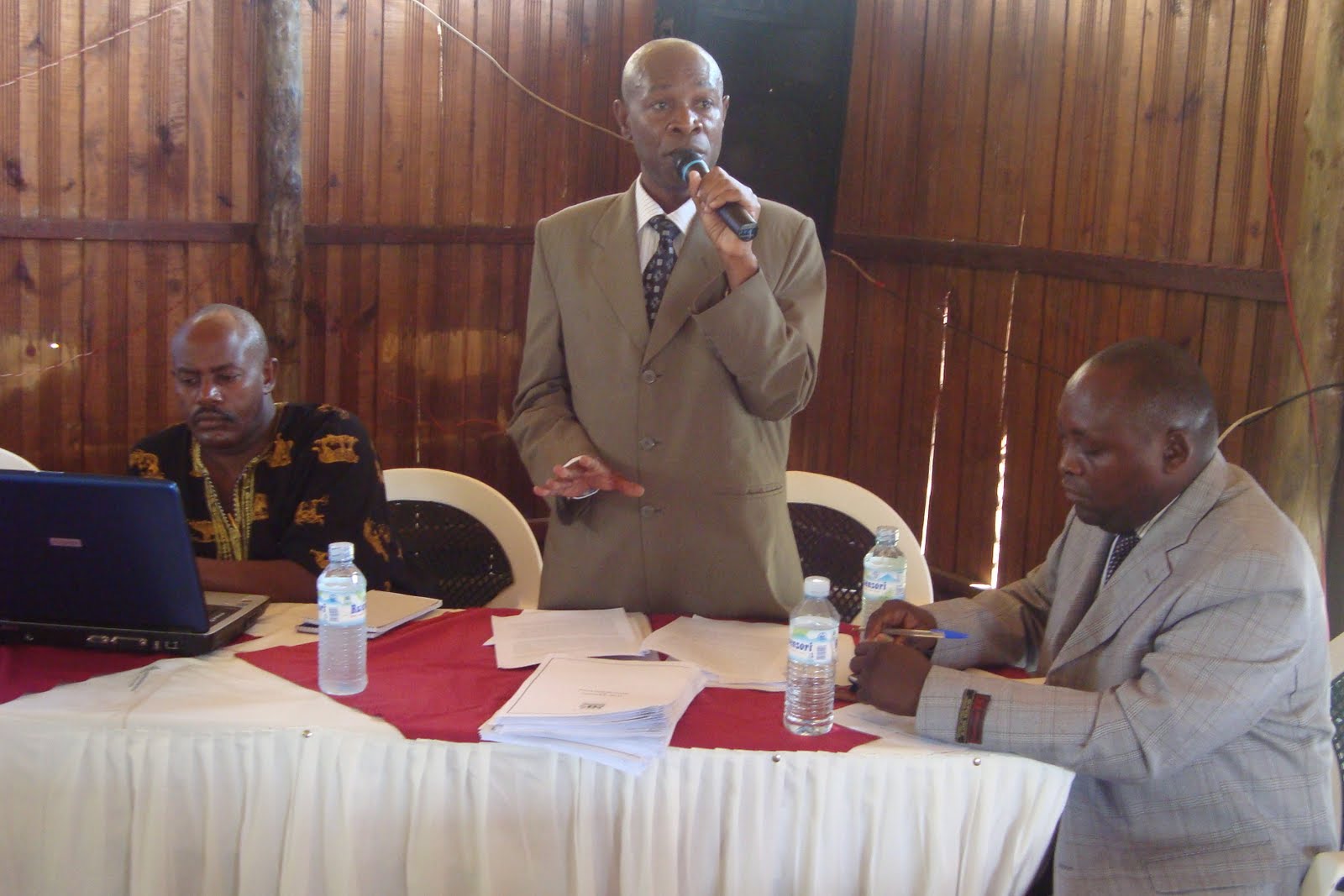
This 3rd DIPF meeting was co-funded by the Kasese District Local Government and the Rwenzori Consortium for Civic Competence (RWECO). The meeting had four main objectives, which were: to sensitize the members about the national anti-corruption strategy and the new anti-corruption laws; the District Strategy to Fight Corruption; Review of the progress of the DIPF; and a scan of the ethical conduct in the delivery of social services at the grassroots. The meeting was graced by among others the heads of the various religious sects in the District, members of the District Technical Planning Committee (Heads of Department and sections), the District Executive Committee, the Resident State Attorney, the Criminal Investigations Department (anti-corruption desk), the Private Sector and Civil Society organizations. Various papers were presented and discussed and a way forward hammered.

The first paper on the National Anti Corruption Strategy (NACS) was presented by Mr. Kenneth Kauta, the Principal Ethics Officer in the Directorate of Ethics and Integrity. He presented a synopsis of the national anti-corruption strategy and the efforts at national level to address the problem of corruption. He highlighted one of the key achievements has been the introduction of the anti-corruption court which has successfully prosecuted corruption cases including grand corruption ones. He also sensitized the meeting on the anti-corruption act and the whistle blowers act. These two acts left a deep impression on the members of the DIPF. One of them, Rev. Fr. Expedito Masereka, remarked that with these new laws, no one is spared of corruption, not even the pope. It was generally agreed that the new laws had widened the net to also include corruption in the private sector, which had hitherto not been expressly covered in the existing laws. However, doubt was cast about the willingness and capacity of government to enforce these laws. For instance, the Bishop of South Rwenzori Diocese, the Right Reverend Jackson Thembo Nzerebende, noted that government was shooting wide and missing the targets, which are the corrupt people.

He noted that the corrupt are well known but government has not done enough to bring them to book. He advised that it may necessary that government studies the tactics used by the corrupt to evade the law so the same can be used to catch them (corrupt).
In his presentation the RDC reviewed the progress of the DIPF and reminded the members of its terms of reference. He noted that the fight against corruption requires more than participation but actual involvement. He used the analogy of an animal farm.
The fight against requires more than participation but actual involuement
At that farm all the animals agreed to throw a party in honour of their master. They drew up a menu that included eggs, milk, and meat, among others. However, when it came to the actual implementation of the menu, some of the animals realized that whereas some were to participate by providing milk and eggs, others were to be directly involved by providing meat, which meant losing their lives. Those that were to be involved declined to participate in providing for the menu. The RDC therefore noted that in the fight against corruption what we need is real involvement not just participation. And this means losing what is so precious to us, for instance money and position (that are not earned!!). This left members of the DIPF shifting unsettled in their chairs.
The Assistant CAO, who is also the District Focal Point Person for Good Governance and Anti-corruption, Mr. Mutungwanda Johnson, presented the local government anti-corruption strategy. In this strategy he emphasized that heads of department at the district are required to form a Steering Committee of five members, one of whom is from civil society, which is charged with the responsibility of ensuring that no corruption is taking place in their respective departments. Besides, each head of department is required to make a report quarterly on what efforts his/he department has put in place to address the problem of corruption. The strategy also requires the district to put up a suggestion box at the district headquarters the keys to which are to be kept by the CAO and one by the member of the civil society. At the time of opening the suggestion both the CAO and civil society member must be present and the issues found therein addressed by the Steering Committee. The strategy requires that this should also be replicated at the sub county level. It was noted that for this strategy to work more successfully, there is need to link the local government’s proposed efforts to those of civil society which already exist. For instance, RWECO already suggestion boxes and notice boards at sub county level in most of the sub counties in Kasese District. All that is needed is a joint coordination between RWECO and the sub county and district local government to sensitize the people to use the notice boards and the suggestion boxes.
As part of the effort to expose unethical conduct and other weaknesses in the delivery of basic services to the communities RWECO presented findings of its monitoring efforts. It emphasized that this expose is one of the roles civil society has to play in addressing bottlenecks in the delivery of social services. Bottlenecks in poverty alleviation include among others corruption. Mr. Mwirima emphasized that one of the causes of corruption is failure by office holders to understand the basic roles of their offices in the poverty reduction strategy. They often do not link the role of their office to alleviating the poor people they serve.

Therefore, they do not mind diverting a few resources to their personal benefit. He added that this is lack of capacity to understand how to address poverty. This lack of capacity is one of the key components of the bottlenecks in structural poverty reduction strategy. RWECO is addressing this by exposing unethical conduct in the delivery of social services at community level. The RWECO findings were based on three sectors – water, health and education. Some of key findings are shown in the pictorial below. A heated debate followed the presentation of the civil society findings.
As a way forward the DIPF meeting resolved to follow pending issues exposed in the RWECO presentation. These included a resolution by the members to task the District Council to pronounce itself on the issuance of operational licenses of drug shops; that there should be prompt reporting of findings from the field and immediate action taken by the relevant authorities, not waiting for the DIPF meeting; deliberate action to operationalize the DIPF at sub county level immediately; the next DIPF meeting is to sit on 29th September 2010 and will consider among others the report of the accountability sector on Mahango Gravity Flow Scheme; and sensitization of the people through radio programmes on the local government anti-corruption strategy and anti-corruption laws.
By James Mwirima

Saturday, July 10, 2010

WHY WATER STORTAGE IN KISINGA AND KYONDO SUB COUNTIES-KASESE DISTRICT!


From the monitoring audit conducted by Good Hope (Focal person & monitors), Local council leaders both at village, parish, sub county officials on 25th/ 6/ 2010, it was discovered that almost all Gravity flow scheme projects serving Kisinga Sub County have their sources in Kyondo Sub County for instance Takwenda and Nyamulhalire schemes in Bulighisa village, Kasokero Parish, Kyondo sub county. During this monitoring visit a lot of gaps were revealed with contributory factors by different stakeholders.
Takwenda source was constructed in 1990 by the Anglican diocese and Nyamulhalire source, constructed in 2004 by Kagando rural development centre (KARUDEC).
All the above sources have enough water to serve the whole of Kyondo and Kisinga Sub counties maximamly. Despite of this capacity, Citizens of Kyondo still crave in vain for adequate water supply.
In 2004, Takwenda and Nyamulhalire sources were merged to form one commonly known as Bulighisa GFS by KARUDEC.
SITUATION IN KASOKERO PARISH.
1. Given the above capacity, Bulighisa village only has three tap stands , one fully functioning, another one on and off and the third one completely unfunctional.
2. On average, a citizen travels 2kms to the nearest tap stand given the hilly nature of the area.
PROBLEM
1. Water volume is more than the size of the pipes used at the source to the tap stands down.
2. 3Quarter pipes used instead of 1.5 pipes.
3. Air sucking pipes not distributed on the line from the source to the tap stands.
4. Pipe from the tank at the source is above the minimum level of water volume (not at zero bottom).
5. Leaking tank at the source.
6. No funds identified by the sub county to facilitate the plumber.
7. Poor monitoring by kyondo local government and water user committees’ members.
OUTCOMES
1. Tank over flow due to under sized pipes as compared to the water volume.
2. On and off water flow at tap stands due to tank over flow and high pressure in the pipes.
3. Lack of ownership by citizens in the parish because they do not benefit from the source as care takers.
4. Tank at the source, over flowing and a 3 qtr pipe instead of 1.5inche pipe supplying all tap stands down the line.
5. Standing near is the sub county water board c/person.
6. Professional advice must have lacked here, and monitoring gap by leaders and civilians!
The impact of lack of pressure regulating pipes causing on and off water flow.

WAY FORWARD.
• The sub county water board chairperson together with other sub county officials committed themselves to organize thorough re-election of new water user committees in the sub county which they said the current members had over stayed on power and no longer interested in serving their community.
• The sub county chief tasked the chair person water board to urgently spearhead the costing of requirements that may be handled by the sub county through the plumber, to be considered in the sub county budget.
• The sub county officials and local council one leaders of Bwethe and Bulighisa committed themselves to urgently organize a follow up visit to KARUDEC about the promise they made of allocating more tap stands to Bulighisa and Bwethe villages in order to enhance community ownership.
PREPARED BY,
SINAMAKOSA ISAAC
Project focal person.

Monday, June 21, 2010

MUGUSU GRAVITY FLOW SCHEME KICKS-off AGAIN


Stakeholders from Mugusu sub county who included among others the chairperson LC111, Speaker to council, sub county chief, community development officer, District water officer and Rweco members(IWDP and RIC-NET) on 3rd June 2010 organized a joint monitoring visit to the source of Mugusu gravity flow scheme.

The purpose of this visit was to establish how far the work had reached, the size of the source, the quality of the water, the workmanship at the source and quality of the pipes bee used as the scheme kicks-off again.

This scheme was started in 2008 but was not completed due to delay in release of funds by UNICEF for the pipes and the rest of the hard ware.
During the visit to source the stakeholders observed the following:
1. The source was already blocked by sand, thus a need to overhaul it
2. One the pipe at the source was not bring in water.
3. Pipes in the hilly places were left on the open thus exposing them to landslides.
4. The Cementatation tank near the source was already leaking and needed support.
5. Connectors at the source needed repair.
6. The source attendant was not facilitated to over see the source.
7. Community members who were involved in the digging of the trench for the laying of the pipes still demand their payment.
8. Communities were not sensitized on hygiene and means of maintaining of the gravity flow scheme.

The team thus recommended the following:
1. Train two scheme attendants already identified and the sub county should allocate funds to facilitate these people.
2. Cementatation tank should be repaired since it was leaking.
3. The contractor should be advised to make payment for those who laid the pipes.
4. District engineer should make an assessment of how many tap stands that can be on this scheme before illegal connectors start connecting their homes.
5. Sub county leaders should sensitize the community on hygiene and maintenance of the scheme.
By Timothy Balikenga

Kisangi primarily school in Bugaaki sub county Kyenjojo district finally gets a new latrine constructed.


“It has not been easy but finally we are there” these were the words of the chairperson school management committee for Kisangi primarily school during a dialogue meeting organized by IWDP in collaboration with RIC-NET to discuss the issues surrounding the construction of the pit latrine by BAKa contractors at the school and which was later demolished on the recommendations of the district engineer due to complaints from the monitors and School management committee Members (SMCs) that the workmanship and the materials were shoddy.

On 18th/05/2010 the community based monitors of Bugaki Sub County Kyenjojo District together with the school management observed that a pit latrine under construction at this primary was being constructed not according to the required standards.
The community based monitors and SMCs observed the following:
 Half baked and already used bricks from dismantled building were being used.
 Rotten pieces of wood planks were used in the construction of the slub.
 Small size iron bars were also being used.
 The contractor had stared constructing the wall just two days after finishing the slub without giving it time to settle.
 Half and quarter bricks were given the first priority in the construction of the walls.
 The name of the contractor was not established because on 24th /05/2010 he wrote in the visitor’s book of the school as KA’GO construction and 26th/05/2010 the names changed to BAKA.
The above reasons forced the community based monitors together with school management to write to the chief executive officer Kyenjojo seeking for assistance from the technical staff of the district.

However on 25th /05/2010 the Assistant District Engineer by the names of Kyomuhendo Edson visited the school and made the following comments:
 The workmanship is good
 Good quality materials on the site.
 The contractor should progress with the work.

The above comments of the Assistant District Engineer did not make the community based monitors together with the school management members pleased; they thus called for more technical advice from other stakeholders.

On 26th /05/2010 the District speaker who is at the same time the area councilor together with the District Engineer among others visited the site. On seeing the work that was being done by the contractor, they recommended that a pit latrine be demolished and a new one be excavated and back filling of the old one be done.

The above issues prompted IWDP and RIC-NET to organize stakeholders meeting at the school. During the dialogue meeting the head teacher of the school and chairperson school management committee reported that they had no information about the construction of the pit latrine at the school but he only saw a lorry bringing the materials.
Recommendations from the stakeholder dialogue
 District should always send information concerning the projects to be implemented to the target beneficiaries for easy monitoring and ownership.
 SMCs and citizens should always take their roles serious and ensure that contractors do not start the work before they show to them documents concerning the work to be done.
 Parents of Kisangi should organize themselves and back fill the two pit latrines that collapsed three years back at the school.
More in the newsletter for the quarter
By Timothy Balikenga-focal person

Thursday, May 6, 2010

RWECO Members particpate in Labour Day

Photos by John B. Thawite (DIO Kasese)


Uganda has today May 1, 2010 joined the rest of the world to celebrate Labour’s Day at Nyakasanga play ground in Kasese district.This year, the main celebrations were held at Nyakasanga play ground, Kasese town, under the theme: “Entrepreneurship and skills; a pre-requisite for employment creation.”

The function has been attended by the President of Uganda H.E Yoweri Museveni, several government officials, Members of Parliament, representatives of workers unions, donor community, cultural institutions, human rights organisations and the resident citizens.

Uganda first marked Labour Day celebrations in 1963 and has continued to celebrate the day every year. Labour’s Day is a gazetted public holiday in Uganda.

The International Labour Organization (ILO) May 1st an international Labour Day in 1889.Since then the day has been celebrated by many countries including Uganda.

For RWECO, this celebration was preceded by training on how to document results for 20 CPf and 15 staff members of KALI. IWDP, GHFRD and RIC-NET.

Tuesday, April 20, 2010

East Africa Election Monitoring Process Roundtable held in Nairobi

Julius,James and John from KRC,RWECO CU and RIC-NET represented Rwenzori region at he East Africa Election Process Monitoring Workshop was held at the Ndemi Place, Ndemi Road off Ngong Road, Nairobi, Kenya.

The Workshop was organised as the first in a sequel of proposed round table discussions, to provide a platform for engaging the upcoming elections processes in the East Africa region. Rwanda and Tanzania will hold elections in August and October 2010 respectively while Uganda will follow in 2011 and Kenya in 2012. The Workshop therefore brought together HIVOS partners and other interested parties to map out common interests and concerns; outline possible interventions and strategies; and formulate roadmaps through which each stakeholder could engage in the elections processes. Of particular importance to the Workshop was appropriate and innovative ways of using ICTs as tools for effective monitoring and management of the elections processes.

Tamme Hansma the HIVOS Programme Officer, Human Rights and Democratisation (East Africa) made a few opening remarks. After introductions, the Facilitator, Ms Koki Muli gave an overview of the electoral cycle and process, which essentially set the pace and parameters for the Workshop. Jenny de Boer of TNO ICT, Tanya Notley of Tactical Tech, Ezekiel Massanja of LHRC, Reinier Battenberg of Fruits of Thought and Erik Hersman of Ushahidi made presentations on the work of their respective organisations. During plenary discussions and group work sessions, Participants were able to engage with the presenters, the presentations and with one another thus enriching the Workshop’s outcomes.

The Workshop was closed by Ms Will Janssen, HIVOS Representative.

The Workshop was facilitated by Ms Koki Muli while Ms Njeri Kang’ethe recorded the proceedings. Participants were drawn from HIVOS’ Partners and other interested parties and senior HIVOS’ staff.

Some of the outcomes of the Workshop were the strategies that were formulated by the Participants; and which to a great extent, informed the country action plans/roadmaps.

These strategies were:-
For every country, voter education must be a key intervention at every phase of the electoral cycle/process.

Law/Policy Reforms – points of entry must be found for each country e.g. Tanzania review process, Kenya Constitutional Review/Boundaries etc.

Whilst use of donors’ resources e.g. databases is encouraged, CSOs must maintain their autonomy.

Ways must be sought to collaborate with election management bodies to ensure co-operation and avenues of building on synergies rather than working at cross purposes.

CSOs must employ innovative ways of inspecting voter registration, e.g. sampling, collateral surveys.

A comprehensive, sustainable monitoring process that includes conduct of the media, politicians, voters themselves and other stakeholders should be put in place.
For every country a contingency plan should be put in place to deal with what ifs of an election, e.g., parallel votes.

Ways and means should be sought to formulate citizens’ manifesto for every country.

Ways and means of owning means of independent opinion polls should be sought.

There is need to establish a regional steering committee that coordinates the commonalities of the strategies arrived at; lessons learnt, etc. This should be replicated at the national level so that CSOs speak with one voice.

At the close of the Workshop that run from Thursday 4th – Friday 5th March 2010,, each country roadmaps were in place and the Participants had already diarised plans of action. Ms Will Janssen, HIVOS regional representative, offered the option that HIVOS will provide staff input to assist in keeping the momentum going.

This Report is a summary of the proceedings and key outcomes of the Workshop.

Tuesday, April 6, 2010

CITIZENS EFFORT IN ELECTIONS MONITORING PROCESS:


Greetings from the Rwenzori region, and updates on the planned citizens based action on elections monitoring process.

Rwenzori Consortium for Civic Competence (RWECO) has been joined by Kabarole Resource and Research Centre and Rwenzori Anticorruption Coalition to form an elections process monitoring platform that will monitor the electoral process in all the districts of the Rwenzori region (Kasese, Bundibugyo, Kabarole, Kamwenge and Kyenjojo (and the new creations thereof)).This brings a total of 77 sub counties (and new creations thereof) and about 1500 polling stations.

Amongst themselves RWECO and her partners already have a total of 700 grassroots monitors in all the sub counties of the mentioned Districts who are tracking service delivery and holding leaders accountable. These will be mobilized and additional 800 more recruited so each polling station is overseen by a monitor over the entire period of the electoral process (voter registration, display of registers, candidate registration, campaigns, actual polling and post elections).

RWECO plan to use web based tools to document and report on the electoral process and organize interface occasions between the citizens and the relevant electoral stakeholders to demand for and cause action on the issues documented and reported by the citizens.

Also, we intend to mobilize the citizens to formulate a citizen manifesto that will guide them to effectively engage with different candidates who will stand for different positions. We shall popularize the concept of citizens’ manifesto to influence or guide the way grassroots choose their leaders and hold them accountable.

Finally we intend to mainstream and promote peaceful resolution and management of conflicts in the electoral process and post election. We shall promote dialogue at all stages and among candidates and other stakeholders.

The uniqueness of this project is that it empowers citizens to mobilize each other, using a mix of both traditional and web based information and communications technologies, to participate actively in all stages of the electoral process and ensuring the process is free and fair.
It also links elections to the wider good governance picture by empowering citizens to make informed choices in choosing leaders based on mutually agreed terms of reference against which they will hold the leaders accountable. For instance, we plan to ask each person seeking leadership position to sign with the citizens a commitment to fight corruption once in power. The citizens will then hold this leader accountable by the signed commitment they make.

Wednesday, January 27, 2010

A Police man on defilement charges in KASESE

POLICE in Kasese are holding of their own on charges of alleged defilement charges.

The Kasese district officer in charge of criminal investigations department Abas Seenyonjo confirmed the developments when contacted for comment Jan.27 but declined to divulge the details of the case.

Ssenyonjo declined to reveal the identities of the suspect but our reporter has since established his identities from other sources as Sam Thembo the officer in charge of Kiburara police post in Kisinga sub-county Bukonzo county Kasese district.

According to the source within the police force which never wanted to be named because he is not authorized to talk to the press Thembo was picked from his place of work on Sunday and by press time he was still being held at Kasese police station as investigations continue.

Ssenyonjo said once investigations are complete Thembo’s file will be sent to the resident state attorney who will prefer charges against the accused and sanction if for court proceedings.

The CID boss decried of rampant cases of defilement in the district.

He however noted that some parents of the defiled girls report to police after negotiations with the suspect’s failure to pay the negotiated amount of money.

He said there is need for massive sensitization of the general public on the dangers failure to report defilement cases to relevant authorities.
by Michael Karugaba in Kasese

Tuesday, January 19, 2010

Rwenzori Peoples' Voice: Police summon Kasese town council officials over land sale

http://www.monitor.co.ug/News/National/-/688334/842980/-/whauc0/-/index.html

Police summon Kasese town council officials over land sale

Police in Kasese have summoned three senior officials of Kasese town council over alleged illegal sale of public land in the town. The accused are the town council chairman, Mr Cosmas Byaruhanga, the Deputy speaker, Mr Charles Masumbuko and the town clerk, Mr Wilson Musabe.
The trio were supposed to appear before the Officer in charge of Electoral, Political and Media crime, Mr Rashid Monday on Tuesday but by 5 pm none had appeared.
Mr Monday said the officers were attending an extra ordinary executive meeting but had promised to appear before his office to record statements.
Land in question
According to a press release from the District NRM office, the land in question includes the old taxi park on Speke Street, area near Nyakasanga police post along Kasese- Fort- Portal high way, the Lions Garden on Stanley Street and area behind Kasese town council offices along Rwenzori Road.
Authorities warned
The release signed by the party administrative secretary, Mr Buduwe Masitaki, warned town council authorities to back off from the sale of any public land.
The plot at old taxi park is currently being used by traders to off load their goods from Kampala and load for village trading centers.
When contacted, Mr Musabe denied knowledge of the summons.

Kasese Resident District Commissioner, Capt James Mwesigye, said he warned the town authorities against sale of any piece of land.

Mr Mwesigye, who also heads the Kasese District Anti-Corruption Committee added, “The agreements are done privately between the council authorities and the buyers but when they fail to agree or buy hot air that’s when they expose what was done in secret”.
By Colombus Tusiime.

Friday, January 15, 2010

Kasese district officials deny misuse of funds

Kasese district officials deny misuse of funds

Three Kasese District Local Government officials accused of alleged misuse of funds for a Gravity Water Flow Scheme have dismissed the reports as false and un researched .

The District Chief Finance Officer [CFO] Ferigo Kambale, Charles Police Mugisa the former chairperson of the Contracts Committee and the District Water Engineer Olweny Lamu stormed The New Vision in Kasese on Wednesday saying the reports were false and un researched.

The Sh. 720 million worth Gravity Flow Scheme is located in Mahango the sub-county comprising the steep mountains overlooking Kasese Municipality.

The trio were responding to a story in the January 10 Sunday Vision edition in which the Kasese Resident District Commissioner Captain James Mwesigye was quoted as ordering the police to arrest the three senior district officials..

“Yes, the RDC’s concerns were genuine . But he hurried in saying what he said because by that time the water project was not yet declared functional”, the trio said almost in chorus.

Earlier, the RDC had received reports from the general public in Mahango sub-county that there was no water flowing through the supply taps of the Gravity Water project system.

The RDC visited the affected area to see for himself and confirm the reports the basis on which he ordered police to take statements from the concerned district officials.

A source in the C.I.D .department at Kasese District Police headquarters confirmed that the trio on the orders of the RDC were called to police to make statements

Police later dispatched a team of investigators who went to Mahango and took pictures at various stand pipes, the police source who said he was not supposed to talk to the Press said on Wednesday [January 13].

The District Water Engineer said, “I had not even issued the Certificate of Verification because all of us were waiting to see if the contractor had done the expected work”, Olweny Lamu claimed.

The CFO said, ‘No money is released without the knowledge of the Chief Administrative Officer and I trust the working methods of the CAO”, Kambale said.

At that time, the deputy CAO Willy Bataringaya was the acting Chief Administrative Officer because the incumbent CAO Giles Kahika was on interdiction over allegations that he had got involved in recruitment of ghost Local Administration Police officers a case that was later waived off and reassumed office. MORE
John B.B.Nzinjah in Kasese 13/01/2010 Kasese district officials deny misuse of funds

The former chairperson of the Contracts Committee, Charles Police Mugisa explained that the contract to construct the gravity flow scheme was genuinely given to a Kasese based company called RUDO Investments Ltd

The New Vision attempts to locate the offices of the company in Kasese town were futile but sources said that the company was owned by two people one called Ruth and another known as Dorothy hence the name of the company RUDO Investments Ltd.

In a telephone contact an official in the Auditor General’s Office in Kasese said, “We are aware of the allegations but we cannot talk to the press and please do not attempt to reveal my name”.

“The RDC acted so early because the Water Engineer had not yet written to say the project had been completed and functional. He should have waited”, a member of the District Public Accounts Committee said but asked to be anonymous because the issue was still with police.

In a face to face contact with The New Vision, the chairperson of Mahango sub-county Community Project Implementation Committee Jackson Mbabo said, “According to the explanation of the Water Engineer, there had been a small mistake with the design of the scheme because after it was corrected, water is flowing and the people have no complaint”.

He said the scheme was designed to have 40 tap stands and that the source was supposed to release 2litres of water per second. “But the volume of water was not enough to adequately feed the number of stands rendering several of the tap stands starved”, Mbabo said.

Mbabo said that district had also later taped two other sources and integrated them into the main source of the scheme.

“And I think the people are happy enjoying the fruits of the NRM government. I do not see why there should be any farce about the project. We want harmony. I am even going now to tell the RDC that the problem had been handled and corrected”.
By John B.B.Nzinjah in Kasese 13/01/2010

Police to arrest three senior civil servants in KASESE

THE Kasese Resident District Commissioner, James Mwesigye, has ordered the Police to arrest three senior civil servants following allegations that they misappropriated over sh700m.
The accused are district water officer Lamu Olweny, the district finance officer Ferigo Kambale and the former chairperson of the district contracts committee Fred Mugisha.
The three recently recorded statements at Kasese police station and asked to report to police weekly.
They were summoned after Mwesigye instructed the Police to arrest them over misusing public money which was meant for the construction of a gravity water flow system.
Funded by Kasese district local government the gravity water project was to extend water services to the lower areas of Rukoki subcounty. Some parts of Mahango where water resources are scarce were also to benefit from the scheme.
Mwesigye explained that out of the 40 tap stands connected to the water system, 17 have never delivered a drop of water and that only five taps are functional.
"The money was meant to construct 40 tap stands but when I went to the area, I was shocked to see only five functional taps" The RDC told Sunday Vision on Friday.
Mwesigye noted that 18 of the tap stands have had water only once a year. When it comes; it is too slow and little to serve the population of over 2,000 families.

Friday, December 18, 2009

Adding a mobile component to the e-society pilot in Kasese


Background
HIVOS and its partners in the Rwenzori Region, namely KALI, IWDP, GHFRD and RIC-NET (working together under the name Rwenzori Consortium for Civic Competence, RWECO), are implementing a project titled “Enhancing Civic Competence to influence Local Government Planning and Feedback Processes in Rwenzori region”.

The overall objective of the project is “Making government structures affordable, transparent and efficient” (PEAP, 2004).

In relation to this bigger framework,RWECO in partnership with IICD and HIVOS have decided to run an e-society pilot in on one of the three districts (Kasese District). The project will use ICT in innovative ways in order to achieve the overall objective by adding a mobile component.

There are a number of identified challenges in using mobile phones to communicate and to access and disseminate information in Kasese. The most profound seems to be:
• Funding and affordability (total cost of ownership for users, innovative business models and billing plans for service delivery).
• Infrastructure (limited network coverage, network quality, electricity issues).
• Gender issues (men/women ownership and control).
• privacy issues
• Different networks, different tariffs.
• Surrounding supporting systems (trouble shooting, capacity building, user uptake, language , literacy issues, and customer care).
• Content (creation, management and relevance).
• Mistrust between citizens and the local governments, especially those at higher levels.
• Other challenges (segmentation, market strategies, lack of documentation and collaboration).
Here are some concrete examples on how mobile phones could add an extra value in the e-society:

Bulk SMS seems to be a key solution in e-society and can be used for sending out local news, alerts, announcements and reminders about upcoming meetings, events, radio shows, training etc.

It could also be used for sending out results from meetings, studies etc. An interactive bulk SMS program is preferred so that users can react on the content, for example challenge the agenda and come with suggestions, ideas and concerns.

Dedicated hotline (voice, SMS) for whistle blowing where people anonymously can alert (not report) on corrupt practices among civil servants and companies etc (see BungeSMS)

SMS quiz for civic education and awareness on good governance issues (see TextToChange). Voters’ education through quiz is another idea.

SMS polls to collect citizen opinions and priorities and forward them to local government, parliamentarians, media etc.

Mobile surveys and data collection for evaluation and monitoring purposes (see Episurveyor).

Kasese is surrounded by national parks and nature reserves and there are many conflicts between animals and farmers (animals are eating the farmers crop).
A warning system like one developed to track elephant movements in Amboseli, Kenya, could be used.

Public access solutions, for example using MTN's Village Phone Operators as a way improve service delivery and increase participation. It might be cost-effective to use smart phones and printers and notice boards as a way to reach out in areas where phone ownership is small.

Monday, December 14, 2009

45 pupils defiled and pregnant

About 45 pupils defiled and pregnant in the ten sub counties of Kasese district in the last three months.
Reasons for the above cases as put forward by respondents from the respective schools

Long distances traveled by pupils to school exposing them to defilers.

Parents sending their young girls to trading centre during late hours.

Poor relationship between parents-teacher-pupils where by parents does not allow teachers to punish their pupils in case of misbehavior.

Weak enforcement officers to punish those who defile the pupils. police sometimes do not handle these cases professionally leading to defilers being set free after sometime.

Interference of some politicians in the cases of defilement who encourage parents to discuss issues at their home without reporting them to police.
For full details of the list contact rweconews@gmail.com