Wednesday, July 4, 2012

Districts in Teso and Acholi Region Embrace use of ICT for Social Accountability


RIC-NET under CEW-IT   started  interface meetings with District leaders for the design and development of websites and e-libraries.

This comes after the commencement of the project "ENHANCING CIVIC COMPETENCE TO STRENGTHEN SOCIAL ACCOUNTABILITY IN 25 DISTRICTS, IN FIVE REGIONS OF UGANDA"

where one of the activities is to design and develop online platforms that will enhance information sharing and gathering feedback from the citizens.
RIC-NET is mandated to implement this activity on behalf of CEW-IT with all  members from the five region of Teso, Acholi, Rwenzori, Buganda and West Nile. The activity is part of the project funded  by EU & HIVOS.

The visit to Teso and Acholi region started on Monday  25th June all through to 29th June 2012 . RIC-NET staff (Executive Director and I.C.T.O) accompanied with staff from PAC Uganda and ACORD  traveled to Teso sub-region and Acholi region. Five (5) Districts were visited and roundtable meeting was held with leaders of Soroti, Serere, Ngora in Teso and Kitgum and Gulu Districts in Acholi region.

Teso Sub-region
Soroti District:
The  RIC-NET team attended a budget conference for Soroti District on 26th June and shared with both political and CSO leaders on the vision of enhancing information sharing through ICT to boost social accountability.

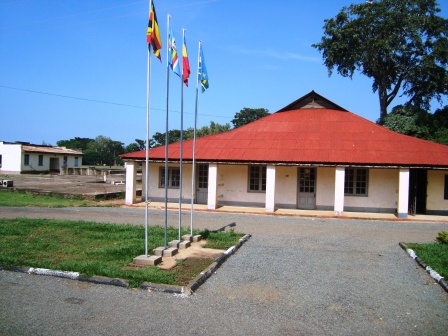
on 27th June, the team met with District Chairperson Mr.Ebunyu George Micheal, the Chief Administrative officer Mr.Okello and ACAO Jane Akiror among others.
some of the issues discussed were activating and redesigning the District website  www.soroti.go.ug that was provided by UCC, development of the E-library and establishing the ICT Resource Centre. 
  The District leadership was very willing to partner with PAC Uganda and RIC-NET to realise the set ideal.  It was recommended that further technical details be discussed with the PPO Mr. Simon Okanya and the Acting District  information officer who was not present.

The leaders assured the team of their support whenever needed and the following action were to follow:
  • PAC-Uganda to formalize the partnership by availing and signing the M.O.U with the District such that the technical process commences.
  •   The District to get details  of passwords from U.C.C 
  • The District staff to start collecting current departmental information.
Serere District
The meeting was held in the C.A.O's office at Serere District Local Government Headquarters.
 
The District leaders led by  the District Chairperson included the District speaker, the Chief Administrative Officer (C.A.O) and the incharge of the website at the District.
The team discussed issues around re-design and development of the District website and e-library, online platform to facilitate social accountability and the bulk sms. www.serere.go.ug is active but has with some challenges and therefore that would need more input. The district leadership appreciated the idea of this technical support and pledged maximum support and co-operation. However, the leaders cautioned the CSO to remain as Civil society and not opposition party agents.


The way forward was that;
Ø  An M.O.U is signed between Serere District and PAC-Uganda so that work can officially start. The district focal person to start collecting current information from departments so as work to become much easier and quicker as it starts.PAC Uganda should organize a district roundtable meeting with all leaders and CSO in the District; and a workshop should be organized to educate some CSO on how the local Government Structures work.  And that design and development of the two online platforms to be done and online 8 weeks after the signing of the M.O.U.
 The C.A.O Serere promised to write to those hosting and maintaining their website to release to them the C-panel details (passwords) so that they can have full access to their site to enable the Technical team start working.

Ngora District
The meeting was held on 27th June 2012 in the C.A.Os office, Ngora District Local Government headquarters.
The team met the  Chief Administrative Officer  Ngora and shared alot on social accountability and information sharing platforms including the online platforms. 
The District does not have a website and the support to design the District website and e-library was highly welcomed.
The chief Administrative officer was supportive and welcomed the initiative.


As away forward,Ngora District and PAC-Uganda will formalize the process by signing the M.O.U between the two parties and technical work would commence immediately. Details on how to include other online platforms would be discussed in subsequent meeting with both the political leaders and the District civil servants.


Acholi Region
In the Acholi region, two Districts were surveyed and interface meetings were held with the District leaders.
Kitgum District


The meeting was held on 28th June 2012 at the District head quarters in Kitgum. Present were the District Chair Person, District speaker, the District Data Clerk, ACORD staff in kitgum field office and Gulu office, and RIC-NET/CEW-IT staff.
 
Issues discussed were a build up on what ACORD had shared with the District about the project and also specifically the design and development of the district website and E-library. key issues that these platforms would enhance was: Information sharing and access to all stake holders;     Increasing the District visibility and popularity;  Having district officials corporate e-mails; Having district important documents online for easy access to the entire community among others.
 All the above advantages were explained to all District leaders in all the Districts.
The district speaker appreciated and welcomed the initiative and pledged cooperation. Kitgum had a website  before but went down due to issues of maintenance it and thus calling for fresh design.
It was originally www.kitgum.go.ug .
As for the way forward,  An M.O.U to be signed between ACORD and the District to enable official commencement of the project.
The Data clerk to get back to the technical team (RIC-NET) by Wednesday 4th July about the proceedings with U.C.C.

  C.A.O to write formally to

 U.C.C and those who hosted the site before for all administrative rights (C-panel details) so as to enable the technical team access the back end of the site.
The data clerk to start collecting current information from all departments to enable speeding up work.

Gulu District

The meeting was held on 29th June 2012 at the District headquarters Gulu.
The officials met were the District ICT personnel and the same idea of the two online platforms was discussed with him.
He also indicated that they had designed some template/ mockup site of how they would want their website look like.
. 
He stressed that Gulu has a running website www.gulu.go.ug but also with a number of challenges and would advocate the redesign and development. Therefore the way forward was;
  An M.O.U to be signed between ACORD and the District as the first issue that will act as the entry point. The draft mock up to be shared on mail by RIC-NET so as to guide us design the website according to their preferences. The District ICT personnel to also share the current website administrative details with RIC-NET technical team. The District ICT personnel to contact C.A.O to write to the heads of department requesting them to prepare current and updated information for the website. And also the ICT personnel to go ahead and collect this departmental information.

Tuesday, July 3, 2012

Questioning Service delivery in Kabarole District:


Like any other day of the last month of the government year, 27th  June, 2012, was a big step in questioning service delivery in Kabarole district. The monitors in Busoro sub county, Kabarole  district, organized a joint monitoring exercise with the district water department, sub county leadership and the community on Wednesday, 27th June, 2012. Morning was cool and all monitors assembled at the sub county for a briefing by the team leaders. Present were: The Chairperson LCIII Busoro, Mr. John Young, Health Inspector, Incharge Rwengaju HCII, sub county councilors, community monitors led by Mr. Paul. In attendance was also Ms. Margerate Abwooli, staff RIDE Africa, and the RWECO staff.
Going by the word, the team headed to Ibale parish to monitor the newly constructed shallow well. At the shallow well, the community were already mobilized by the local councilors and pointed out their concerns regarding the shallow well. Important to note was that the shallow well had never been handed over to the community and no water user management committee had been elected- the big question asked was, how did the contractor execute work without a project management committee? The LCIII chair was caught in surprise and could not answer. While the health inspector gave his opinion the community could not accept any explanation without the shallow well being handed over and all structures put in place. Vigilant to public service delivery in the parish, the Bataka immediately summoned the LCIII chairperson for a meeting at the shallow well to sort out the mess and fix the gaps. The meeting was scheduled for Saturday 7th  July, 2012
LCIII Chair, holding bottle after tasting the water from the shallow well
The monitoring team headed to Rwengaju Parish, Busoro Sub county, Kabarole district. Rwengaju Parish is “UN Village” a food basket for Kabarole and Uganda. We headed to monitor the shallow well, but what did the community say about the shallow well “ IZIBA LYA CHAIRMANI” loosely translated the Shallow well for the Chairman LCI. Only to reach there, the  shallow well  had been abandoned by the bataka because the water was salty. Armed to the teeth, the LCIII chairperson defied the rules and tasted the water- “ halimu ekisura”, then the health inspector tasted “ the water is salty” one of the monitors asked, was there any testing of the water? The Health inspector, replied that, all the three tastes were done and the water was approved to be good for drinking and use but only the bataka had not been sensitized to use the water, the water user management committee was not doing their work as per the guidelines. That’s how public funds can go to waste asserted a female monitor. Mr. Jimmy Odyek, asked the LCIII chairperson how much funds had been spent on the shallow well, the team was informed that UGX 3,800,000/= had been spent, and that for the sub county had constructed 103 shallow wells, about UGX 391,400,000/= serving a population of 35000 people. At that shallow well, all the participants in the monitoring exercise realized that government funds can go to waste if not well monitored as we met children and elderly women fetching water at the nearest un protected water point that was presumably tasty for drinking and washing clothes. What a day in Rwengaju a “UN Village”
Monitors at Rwengaju HCII
Everybody encouraged to find a better reason to explain his/her time during the day, we all headed to Rwengaju Health Center II, where the In-Charge had joined the monitoring team. At the HCII, we met the staff on duty who moved us around the health unit. Sanitation was clean, water available in the water harvesting tank, toilets clean, reason headed by the woman one monitor lamented. Then I took a keen eye, indeed I went to the toilets to justify the comments “ all was clean” that showed how female nurses were managers. What about the funding- we established that, each financial year, an indicative planning figure (PHC) of UGX 1,800,000/= was given to the HUMAC, but how much actually was released was UGX 850,000/= targeting 9000 people in Rwengaju Parish, “UN village”. Lets subject this to mathematics pa capita expenditure= 850000/9000= 94.4. When the analyst mentioned that Ugx. 94.4, was meant for PHC per person for the whole year, the team burst into laughter of annoyance. How can that be? But it has happened, more so the incharge informed the team that the Ugx 850,000/= was not a guarantee.
Immediately the community monitors realized the need for community monitoring and feedback from the leaders. During the session of sharing the monitoring sharing at Rwengaju Parish hall, it was recommended that the sub county leadership should sensitized the community about water and sanitation, health and education. RIDE Africa was asked to participate in the exercise where they pledged a radio talkshow to the LCIII Chairperson.

What was my take from the monitoring exercise:
Local solutions to local problems by the concerned people, other then waiting for the presidential pledge of constructing a GFS to serve Rwengaju, the local leadership can still do a lot in sensitizing and involving the local community.
Government program if not well monitored can go to waste as evidenced by the abandoned shallow well in Rwengaju, I believe there are many more projects that have been abandoned due  to poor workmanship in the country side.
Monitors and RWECO staff, admire the Busoro magnificent Kyaninga hotel
Local initiatives are more sustainable than top down projects- that elderly woman who mentioned that “ iziba la chairmani”  is an indicator  that the  project  was top down, if we go by that, we can find many more projects of that nature.
What about the social life in Rwengaju “UN Village” the monitoring team visited one of the places to be while in Busoro sub county.. out of town, environmentally friendly  with the most attractive Tooro scenery- Kyaninga Hotel in the heart of Busoro sub county

Compiled by:
RWECO Staff in the field

Wednesday, June 27, 2012

WHEN THE WELL IS DRY, THEY KNOW THE WORTH OF WATER; PROVIDE IT

They were told that hope had finally come, and that in a few months their mourning would be turned into dancing. The women and girls clapped their hands with excitement, while the men sighed with relief for the burden would soon be lifted off their sisters’, wives’, and mothers’ shoulders. Anxiously they waited till the final bang! The water project is complete; you can finally access water from just within your neighborhood. At the cock’s crow the next day, every homestead was alive with the cleaning and collection of water containers and off they rushed to the nearest tap stands with excitement to fetch the long awaited safe and clean water. Not surprising that the lines at almost every tap stand were averagely long. But alas! After one, two, three, ten, twenty people had filled their containers, the taps went to “sleep”…..confident that it was a new project, the women and girls chose to wait for the taps to “wake up”... with no signs of water by evening, someone….some where needed to explain this short lived offer. As hours and days went by, it became clearer to them that the flow was to be at most irregular and at worst non available. The women cursed and jeered while the girls and children never gave up on lining up at the tap stands for water each day hoping against hope that somehow things will work out. Perturbed by their women’s frustration, the men sought for an explanation from the leaders and CSOs, while others moved up to the source to establish the cause for the sudden change of events. This move was the beginning of discovery after discovery about the water project; first, the community learnt that the water project was offered by Amaizi Marungi based in Mbarara, that the project cost approximately 35billion shillings, and is expected to have 436 connection points with a reserve tank at Bwera hospital. I n addition to this the scheme is expected to serve 35352 people. Unfortunately, this project just like other unsupervised public/government projects was at the verge of hitting a snag. With continued pressure and plea from the community for water, KALI, RIC-NET, RWECO-CU and BIC undertook serious monitoring and follow up of this project; two field visits to the water source were conducted in November 2011 and January 2012. Several interviews were also conducted with the water user community, the leaders and even the water source attendants. And from these monitoring and follow up activities several findings/anomalies about the water project were established.
These ranged from, illegal connections, non treatment of water due to non functional/utilization of water system treatment plant, non-payment of user fees by the community due to the inconsistence in the user fees charged at water Kiosks, use of small water pipes- accordingly, the original design of the water source pipe (in-let) was supposed to be 12 inches but the team found out that a 6 inch pipe size is what was used instead, lack of maintenance of the scheme i.e the two stone filtration tanks collecting to the main tank were blocked and filled with mud and as thus water could not easily go through to the rest of the tanks, poor monitoring of the scheme by the leaders and Scheme authorities to , non and or delayed payment of water source attendants for over two years, to mention but a few. Aware that development and improved service delivery require joint efforts, KALI and BIC/RIC-NET with support from E-motive through RWECO organized a stakeholders’ dialogue meeting on 29.02.12 at Bwera Sub County to share the monitoring findings and also jointly identify lasting solutions to them. In attendance, this day, were Political and Civil servants, CSOs, and members of the community. Key among these leaders were the Deputy RDC Kasese Mr. Muhindo Aminadabu, Bwera Town Clerk, Mrs Biira Eve, the O.C Bwera Police Station Mr Mwesige Vicent and the Superintendent Bwera Hospital Dr. Gatare S. Alphonse among others. Approximately 100 people attended this stakeholder’s dialogue meeting. On behalf of the Community, one Muhesi Nicholas of KALI presented the monitoring report findings that sparked off a hot dialogue between the community and her leaders.
Responding to the raised issues, the Town Clerk refuted most of the raised issues as only allegations. She explained that the water project is currently benefiting over 80000 people in the area and that the water is routinely treated and safe for consumption. She however cited the continued challenge of non-payment of user fees by the community and the different rates charged at water Kiosks by the private vendors. Adding to this, the Superintendent, regretted to inform the participants on the impact/effects of the poor water that was being consumed by the community. He said the rampant and prevailing cholera in the area that had claimed many lives was largely due to consumption of dirty water and poor sanitation by the community-use of dirty water containers. Dr. Gatare also revealed that, the same water is responsible for the increased cases of intestine perforation which he said was a very bad disease that can only be treated by operating on the victim’s intestines. The Superintendent revealed that Bwera Hospital in the recent past had registered many cases of intestine perforation. Intestine perforation, he said is common along the hilly areas and reportedly high in Busongora North, Bukonzo East and West Constituencies. He appealed to CSOs and Government to ensure that safe and clean water is extended to the community and that the community is intensively sensitized on proper sanitation practices. Wrapping up the dialogue, several recommendations that included recalling the contractor to correct the raised anomalies, Police intervention to block illegal connections, institute organized and functional water user committees, strengthening monitoring and supervision of public projects by local leaders, and extending the hospital’s social services to the people were made. Closing the meeting, the Deputy RDC thanked KALI, BIC/RIC-NET and E-motive for bringing out these issues to the leaders’ attention. He also expressed condolence to the families of those who lost their loved ones in the recent cholera outbreak in the constituency. He appealed to the community to learn to be more serious on issues of sanitation and timely treatment, saying this is the only way they can keep cholera and other diseases under check. The RDC revealed that Government is still committed to the provision of safe and clean water to the community and as thus, they will work closely with Amaizi Marungi and Mpondwe –Lhubiriha Town Council to ensure that the raised complaints are addressed. With all this said and done, I extend my gratitude to the people of Bwera for their vigilance and bravery in raising their voices about this project. I say bravo, your efforts have saved 35billion shillings public funds from going to waste.

Tuesday, June 26, 2012

Hivos and EU staff visiting RWECO Members


This video is created by photo story methods but the real video of the visit will be on later.

Sunday, June 24, 2012

The Plight of the Vulnerable children


Disability is not inability
Top a pupil demonstrating how he can use the sewing machine 

 The International day of the African child will remain memorable day in Kasese and the Rwenzori region. On the 16, June 2012, Kasese district hosted the celebrations to mark the day of the African Child whose theme was focusing on the children living with disability. 


At the function in Kasese children showed off their skills proving that disability is not inability. Come and support these children in being a cause for social justice.


RDC Kasese Lt. Milton Odongo speaking at the International Day of the African Child on 16, June 2012


Abdul Masereka
Driver
RWECO

Citizens Reap Big in Kasese District


In January 2012, a Citizens parliament was formed in Nyakiyumbu Sub County, Kasese District as a platform for the citizens to discuss the issues concerning the communities around them. They thought it as the best way to speed up development in their area. It is evident now that the NA has not disappointed the dream of the Citizens as it has yielded positively.
The first N/A discussed water scarcity. Water had become a luxury in the sub county. It is no wonder that the women had begun mobilizing themselves for a peaceful demonstration! The formation of the Community social forum also known as the Citizens parliament came at a right time for the peaceful engagement with the local leaders of the area and water now flows at least thrice a week. Government has promised to construct the Nyakirango protected spring into a Gravity water flow scheme to increase the volume of water and also the repair the existing tap stands is going on.
After discussing road network and need to scale up the Agricultural produce in the second parliament, the potholes that existed in the roads have been covered especially the road that joins Kolongoire T/Centre to Ndongo Trading center. Kasese District Local government in collaboration with Nyakiyumbu sub county local government is going to provide a 45km road, a modern market and also supply more improved coffee seedlings to the people to improve the produce and transportation of the produce to the existing markets.
On the issue of schools, infrastructure and performance, teachers have started holding zonal meetings about the same and the citizens now have high hopes in the performance of the pupils in the sub county this year. The building that had spent 3 years without completion has been completed in Muhindi primary school since the sitting of the third CSF which entirely discussed the fate of Education in the sub county. The construction of Kayanzi primary school staff quarters is on and also there has been construction of a latrine in Nyakasojo primary school.
And now the fourth parliament discussed poaching in the area which has eaten up the entire community and engaged the Uganda Wild Life Authority to get the entire community participate actively interfacing the relevant authorities. UWA authorities promised to back the sensitization the parliament had began to reduce or do away with the diverstating effects of poaching which is the main cause of the increased number of orphans in the sub county. They also promised to support their SACCOs to improve the livelihoods of the community members. They also suggested that such a forum should be formed in Kyarumba sub county especially in Kabirizi because it is now ranking the first in the number of poachers and that NAPA should help in creating sensitization through Drama and Music as the strategy they used during the Parliament session.
All the above have been attributed to the Citizens parliament and commitment of the sub county leadership of taking Citizens issues as a priority in their work. BRAVO Citizens Manifesto, Bravo Citizens Parliament.

By SCOVIA MASIKA
KALI

Friday, June 22, 2012

RDC Kasese, Lt. Milton Odongo tells Police Off


After a silence of three years since the launch of the Kasese District Integrity Promotion Forum (DIPF) in 2009, the Resident District Commissioner Lt. Milton Odongo called for a meeting of the 16 member team to discuss the way forward for the DIPF. To kick off the meeting, a premeeting was held with RWECO that had facilitated the initial meeting in 2009 with funding from Hivos and EU. At the meeting, the RDC who presented a paper on the roles and structure of the DIPF lashed at the Police on how they had frustrated his efforts to bring to book culprits implicated in corruption scandals in the district, “ I will not spare whoever was involved in releasing the suspects that stole the machines from Kilembe Mines Limited, how can I be treated like that, what about  the local wananchi how are they being treated by you Police”. At the same meeting, the members immediately resolved to go and monitor the intercepted machines from Kilembe mines at the Police Post in Kilembe.
The citizens vigilance has led to the recovery of these items from the suspects who according to the RDC have for long been making deals in the mines. RWECO a CSO in the Rwenzori region that facilitated the meeting was applauded by the participants for being a people led organization that has provided space for the local citizens to voice their grievances to the leaders. A six point way forward was set up that will see the DIPF in Kasese being among the performing ones in the country since the RDC has assured the members of calling for quarterly meetings and inviting technical staff to update the members on service delivery in the district. Among other service works discussed was the Karusandara road, rot in the sanitation in Schools.The RDC pointed out at Karambi Secondary, Kurughe High and Nyakabale primary school where he physically cleaned a toilet latrine with teachers and pupils mesmerized.
Way forward for the Kasese DIPF
·         Visit Kilembe Mines Ltd, Police Post to monitor the intercepted machinary
The RDC Kasese (right) showing the DIPF team the machines he intercepted
·         Organise Quarterly meetings in the office of the CAO and attended by all members and can invite technical staff to update the team about service delivery in the district
·         Sensitize the district stakeholders on the promotion of ethics and integrity
·         The RDC will consult the presidents office on whether the Cultural institution can be part of the DIPF team
·         The media can participate in meetings of the DIPF and report ethically
·         Whistles blowers be encouraged to report to the leaders who later report the issues to police and other relevant authorities
·         RDC to follow up the Kilembe Mines theft case CID headquarters
RWECO pledged to facilitate the district stakeholders meeting that has been planned for the second week of July, 2012 for which the CAO’s Office has been given the responsibility to organise. The meeting was attended by among others the District Crime investigation Officer, the district Public Accounts Committee, District Public Service committee, Contracts Committee, KADDE-NET, DISO and the media- New Vision, Guide radio, Observer.
Kudos to  RWECO with funding from Hivos that made the DIPF share reports and made an impromptu monitoring of the Kilembe mines police post where the vehicle with the stolen machines worth millions of shillings was parked. The citizens in Kilembe who came to give witness of the RDCs effort to fight corruption in Kasese. The RWECO Coordinator, reported the team the BTC scandal that the director Karughe Farmers Partnership reported on the D-Gorup, the broken bridge connecting Kyarumba and Kisinga. The team agreed to organise a meeting to allow other stakeholders to present their concerns in the district.
On their part, the ACAO Mr. Asaba Wilson, updated the team on the Humukungu Parents SS ghost students, the Lake Katwe sub county Naads issues where the contractor had given the beneficiaries money (sh.50,000/=) instead of delivering goats, the renderer who delivered less chicken instead of 600 chicks delivered 400 chicks. All these were areas of concern that the RDC had highlighted in the report. About the Karusandara road, the ACAO reported that the contractor was made to redo the work where he had done 4mm instead of 6mm.
The KADDE-NET representative Mr. Yusuf, pledged that KADDE-NET was putting order in their house and pointed out that they had a leadership vacuum that had affected their operations. The district information officer who brought the KADDE-Net issue on table was concerned about the poor service delivery by KADDE-Net yet they were mandated by the district to monitor CBO/NGOs/CSOs and ensure quality controls.

By Jimmy BO
RWECO


Thursday, June 21, 2012

KARUSANDARA HEALTH CENTER III, A HEALTH FACILITY WITH NO LATRINE FACILITY


Everyone knows health workers are the custodians of good health practice but this was not the case when I visited Karusandara Health centre on 5th June 2012.On the first glance at Karusandara Health centre one get e attracted by the new building of the health facility and the number of Patients visiting the health facility and the determination of the in charge Ms. Bonabana Agnes who is busy registering and giving prescription to the patients. It’s a common phenomenon for one  to guess that with the congestion of patients at the health facility, the drugs would not be enough but thanks to the government the health centre had enough drugs  with only minimal a shortage of pain killers.

 It was rather surprising to find that the district had employed only 4 staff of which only 2 were nurses (a nursing officer and an enrolled nurse only), a health educator and Askari serving over 36 patients seeking for services at the health time of the visit.  The more shocking answer was that the health facility had latrine and a bathroom as this would not even come to my imagination. “A latrine and a bath shelter?” This should not be the case as health workers are the main advocates for proper sanitation. Words lost meaning because this was the in charge of the health centre explaining to me and the team that had visited the health centre to pretest the health Facility Assessment tool. The efforts of the in charge of the health centre to advocate for a latrine has been fruitless  because it was not considered in the district budget but has to wait and  be considered in the next financial year.

 The visit to the health centre was part of  a two days training in policy analysis organized by RWECO  so as to  strengthen the capacity of CSOs (including those of vulnerable groups) to effectively play a watchdog role and engage the government on key policy issues, to strengthen the knowledge and skills of ordinary citizens (including the most vulnerable) on social accountability issues thereby enabling them to influence public policy as well  to strengthen mechanisms for dialogue and information-sharing on social accountability between CSOs, citizens and the government with use of innovative ICT.  Twenty two participants from RWECO members’ organisations and RWECO- CU participated in the training. The training was facilitated by Eddie Kayinda of Governance Associates.

By Sheila K
RWECO
                                                      

Wednesday, June 20, 2012

THE STRENGTH OF A WOMAN


                                                                 Look, whats this? Fatuma  and Sedress studying the KALI gender policy
Blessed is a woman,
She has the strength that amazes a man.
She bears hardships and carries burdens, 
But she holds happiness, love and joy.
She smiles when she wants to scream.
She sings when she wants to cry.
She cries when she is happy.
She laughs when she is nervous.

She stands up for injustice.
She doesn’t take a ‘NO’ for an answer
Where she believes there is a better solution.
She fights for what she believes in.

She goes to the doctor with a frightened friend.
She loves unconditionally.
She cries when her child excels.
She cheers when her friends get awards
She is the happiest when she hears about a birth or a wedding.

Her heart breaks when her friend dies and
she grieves at the loss of a family member
yet she is strong when she thinks there is no strength left.

She knows that a hug and a kiss can heal a
broken heart.
A woman comes in all shapes, sizes and colors.
She drives, flies, walks, and runs to you to 
show how much she cares about you.

She gives birth to the Nation and
her heart keeps the world moving.

She is a push factor of all development ventures.
She is great behind a successful man

She brings joy, hope and love.
She has compassion and ideas.
She gives a moral support to her friends.
A woman has vital things to say and everything to give.
What a man can do, a woman can do better

However, if there is one flaw in a woman,
it is that she tends to forget her worth. 
  
FATUMA Biira Mulima


A WOMAN’S MOUTH CAN NOW OPEN IN BUKONZO WEST CONSTITUENCY


The KALI Admin. Ms. Fatuma Mulima inducting the interns at KALI through gender policy (June 2012)
 
Walking into KALI’s Office one gets the impression that women are at the center stage of emancipation and development. KALI came into the arena of gender budget mainstreaming back in 2001 when a group of concerned citizens in Kasese district were supported by Hivos highlighted the plight of women to be a great challenge in the public sphere. While at one point the challenge was getting women into the public sphere be it education and health. For decades, Kasese district posted the first ever women doctors (Dr. Florence Kabugho –RIP) in the 1970s and it took two decades to get another women doctor. The only rewards parents gave to young girls was to marry them off and start a family. To highlight the plight of the female gender was like kicking off a dying horse! Kasese posted a leadership vacuum until the late 1980 when the first ever female NRC member was heard of guess who? Hon. Loice Biira Bwambale. That open the minds of many parents to rethink their strategy of marrying off their girl children at an early age but what remained was for women to become assertive and change the status quo.
Women’s voice unheard of:
Through edges a woman’s mouth could not open in public unless by chance when with children and putting the only allowed food in her mouth.  If I can remember well my primary one science, keeping your mouth shut for long a time, unhealthy conditions could be registered.    Woooooooweeeeeee………You can imagine the unhealthy condition women have been living!!! What about the social side of it? Women’s concerns could not be addressed! of course from who? And by who? Believe me you this could have been the reason for women’s invisibility in the development arena.  
Hands up for the different initiatives that have come up with different strategies for strengthening women’s voices and enhance their capacities to integrate women in development and especially KALI-KWATANIZA partnership that has made the ‘voices’ of women councilors/leaders in Bukonzo west be heard to demand for accountability from duty bearers.   
KALI’s achievements in training women councilors/ leaders in Kasese district
KALI with support from Kwataniza trained 20 committed women councilors and leaders in effective leadership skills and councilor procedures that has taken one year. The voices of women were captures as indicated below:
o   According to the participants, mobilization skills have been acquired. This was evidenced by the various meetings organized at village levels and the argument is backed by the findings during the field visits conducted by KALI.
·         Women’s deliberation (participation) in terms of moving and discussing motions during council sessions has improved. Council minutes of some council sessions at sub county levels prove it all. Since the implementation of this project, 10 motions has been moved by women councilors; however only 6 were approved by council members in the sub counties of operation.   
·         The code of conduct of women councilors has greatly improved. Terms like “I am honorable………….” When introducing themselves has changed as provided for by the councilors rules and code of conduct.
·         Lobbying skills have improved among women councilors/leaders. Some documents at sub county levels during the field visit and also confessions from some participants during the wrap up meeting talks it all.  Lobby cases include among others; women’s day celebration by honorable Jetress of Nyakiyumbu sub county, funds for boasting  women’s projects by Honorable Rose of Isango sub county.

By MASIKA SEDRESS KALENGYO
Program Assistant Gender-KALI

Thursday, June 14, 2012

Service Delivery or Sorrows Delivery?

When leadership after leadership comes and goes with less or no improvement on the delivery of services in some renown problematic areas, one is left wondering why? For a long time now, the people in Kyarumba Sub County have suffered with poor infrastructure which has continuously made it difficult for farmers to connect to the markets outside Kyarumba, and, for the general community to move and do their other businesses especially during the rainy season. I can remember clearly since Hon. Bihandi’s time, then Kitaghenda’s time and now Col. Mawa’s the bridge connecting Kyarumba to Kisinga has always broken down and left everyone (community and development partners) stuck and sorrowful! Last month RIC-NET and KRC staff on a mobilization exercise of farmers for the market information symposium were cut short on their journey because the bridge in question had again broken down and the make shift bridge that had been put across couldn’t allow for vehicles to pass. According to some of the community members found at the bridge, they are now “used” since the district doesn’t seem to care; “twabiri beghera ekabada yetu, nibya kandi ibana balemi bethu abakatuleka muyu, mbinu nihabweribya isibikerenu, kyekikaleka ibatatufaku”. Literally meaning, we are used to being in our land locked place, yet we know that our leaders are responsible for this. May be they do not care because they do not live or come from here. It is my appeal to the leaders and all you development partners that some permanent solution to this bridge should be found. Because soon or later even the other bridge through Kabirizi will be in the same state since the community shared that it was in an alarming state too.

Friday, June 8, 2012

The Journey RWECO has taken with Hivos.


What started as a pilot E-Society has attracted the world’s attention in the Rwenzori Region “Kasese district E-Society” that was initiated by Rwenzori Consortium for Civic Competence and Kasese District Local Government in 2009 has become a learning center in Uganda. RWECO with its partner Hivos ventured into the E-Society project to promote civic competence between citizens and Local Government leaders in Uganda.

At its nascent stage,  the E-Society looked an abstract idea but now it has come to lived  the test of time with more partners coming on board to learn how Kasese District E-Society connects with the grassroots citizens. With the discussion group (D-GROUP), information from the resident citizens and those in the diaspora  is shared with the leaders which informs the planning processes something that was hard to achieve. To enhance the information sharing, an E-Library is also part of the package at Kasese District E-Society.

RWECO with its partner Hivos, is rolling out the E-society programme to the rest of the districts of Kabarole, Kamwenge, Kyenjojo and Bundibugyo. The Kabarole district E-Society (http://www.kabaroledistrict.go.ug/) was launched and consultations are going in other district on how to establish  E-Society is on going. Information sharing on governance will nolonger be a word of the past since most of the district reports including advertisements, job opportunities, district budgets, annual work plan can easily be assessed on the district websites.
                                                                   Hivos team at the Kasese E-Society
To strengthen the partnership, a team from the Hivos regional Office in Kenya, the Hague and European Commission in Uganda visited the E-Society center in Kasese on 5th June, 2012. The District Information Officer, Mr. John Thawithe, expressed his gratitude to the support Hivos and EU gave to RWECO that it was given at the right time when the district had passionately longed to implement its   plan on E-governance -“ this E-Society has attracted many development partners to the district since the district website was activated”  

Citizens in the Rwenzori region are actively engaging with their leaders on social accountability to ensure effective service delivery in the education, health, and production sectors. To voice out their plight, citizens have called on the leaders to make government budgets a public document. At one of the meetings, in Kabarole, the citizens presented a petition to the district leaders of Kabarole asking for the review of the Naads policy, making public the Auditor Generals report and passing the clients charters at district level. This has made  the topic on social accountability a public concern in the Rwenzori region.

Given the constitutional mandate of ensuring quality service delivery, RWECO has supported the formation of Kasese and Bundibugyo district integrity Promotion Forums that were launched by the Directorate of Ethics and Integrity in 2009 and 2011 respectively. These foras are intended to provide a platform for the citizens and the district leadership to promote ethical conduct of leaders and technical staff. Through the E-Society platforms, the views of the citizens are compressed and  brought to the attention of the leaders.

It’s our role as citizens to actively engage with our leaders to ensure effective service delivery and to participate in local government processes. What have you done in your local community?


By Jimmy B.O
RWECO

Tuesday, May 22, 2012

CSO PIONEERS ‘HUDUMA’ IN UGANDA


Ms. Peniana from Sodnet demonstrating how the HUDUMA platform works 

  I have worked with civil society in Uganda for a while and engaged with different development partners on topical issues of poverty resource monitoring, but to be sincere it was all about paper work i.e. get a printed tool, go to the field, collect data and analyze, write a report and disseminate. Imagine all the time spent while processing  data would have been saved on my time sheet. Waiting for a miracle to happen, I was introduced to HUDUMA when I attended a workshop organized by CEWIT in Kampala. As you might guess, I was amazed by what HUDUMA meant on this planet earth. To save my time on cracking my head, I was introduced to HUDUMA on Thursday 17th May, 2012, by Ms. Peninah  from Sodnet- Kenya  This lady just said HUDUMA was a Swahili word meaning ‘service delivery’ and that Sodnet had development a platform to engage leaders with the citizenry to monitor service delivery and report on the platform. HUDUMA is a multi-media platform- using Facebook, Twitter, blogs, flicker, skype,  emails and the phone. For which CEW-IT had secured a code -6030. 

                                                                      Mr. Emma Oluka, demonstrating HUDUMA on the smart phone
 
 What made me more interested in this HUDUMA word was that even my phone can be used to report. Look, go to the shop, ask for a smart phone and pay  and business begins. Now what about those with Kabiriti? I asked Mr. Oluka CEW-IT ICT Officer who had introduce the participant to ICT based monitoring tools. My dear, with Kabirit, you can only send your message to 6030, but with a smart phone, he said, he would install the tools, your work will be only to fill in the template while in the field, send the filled template and a report would  be generated instantly. Look how much time  would  I  have saved by  using a smart phone in poverty resource monitoring.    Adopting to ICT is the way to go in order to save on time and get instant reports that have feedback from the service providers. HUDUMA will move CEWIT to the next steps in getting updated information that is reliable, specific and timely compared to the paper work that I had previously used without back of the locations.

Mr. Eddie Kayinda (Standing) facilitating at the CEW-IT workshop ( 17-19, May, 2012

My experience did not end with HUDUMA,   the workshop had other packages of Participatory Expenditure Tracking Surveys that were delivered by Mr. Eddie Kayinda and Mr. Henery Muguzi of Governance Associates. These guys made the link between PETS and the Local Government planning processes which I had formally not bothered to explore. It was interesting when the facilitator Mr. Muguzi  introduced us to the overview of the Budget Formulation and Implementation where he emphasized that one of the mechanisms of monitoring social accountability is to build strong networks in the Country and building internal capacity of CSOs in understanding how government operates at different levels. CSO therefore, have to acquaint themselves with the tools of social service delivery, and also know the different social service delivery programs so that advocacy is on an informed perspective rather than rumors. It was interesting to learn what a budget is, how it is formulated and the Local Government processes. Also important to note was that one has to clearly understand the social goals of service delivery, the roots of service delivery problems, social services provision framework, and the mechanisms in budget and service delivery monitoring if advocacy is to be effective.


Ms. Lucy Den Teuling (right) and Mr. James Mwirima (left) addressing the participants

 On another note,  Lucy Den Teuling a representative from Oxfam  Novib mentioned  CEWIT was a special CSO that was integrating ICT within its work. That ICT can not work alone without the other aspects of development.  She urged the participants to utilize the knowledge gained and apply the skills from the training. 

Who was who in the workshop:
1. Rwenzori Consortium for Civic Competence (RWECO) with its members from Karambi Action for Life Improvement, Good Hope foundation for Rural Development, Rwenzori Information Centers Network and Integrated Women’s Development Program (RIDE-AFRICA)
2. ACORD- GULU with its partners from Northern Uganda
3. CEFORD- with its partners from West Nile
4.  PAC-Uganda from Teso Region, and FHRI from Central Uganda. A team of 55 participants were present and fully engaged for three days at Eastern Route Hotel, Kireka. 
My take from the workshop on ICT based poverty resource monitoring was that HUDUMA and the smart phones if used properly will enable the citizens to interact with their leaders since the HUDUMA planform will be linked to the service providers in the Local Governments and the line Ministries in Uganda.

CEW-IT is a consortium of RWECO, CEFORD, ACORD, PAC-Uganda and DENIVA/FHRI
By
Sheila K
RWECO


Tuesday, May 15, 2012

Ntoroko District Councilors Speaker out on the CM Agenda


“Working with the grassroots people has always been our driving force but since we have challenges of funding our development partners come in to bridge the gap” ( The Vice District Chairperson, Ntoroko  asserted at the leaders meeting held at Karugutu TC hall, 25th April, 2012)

Rwenzori Anti-Corruption Coalition (RAC) together with Rwenzori Consortium for Civic Competence (RWECO) organized a roundtable meeting with the district leaders of Ntoroko whose major aim was to present the Citizen’s manifesto agenda for the leaders to adopt and buy in. During the meeting that was attended by the RDC and DISO Ntoroko who applauded RAC and RWECO for bridging the information gap between the leaders and the citizens reiterated the governments  support to the CSOs to deliver services to the people . On her part, the RDC Ntoroko, said “I support this initiative by RAC and I remember during the presidential and parliamentary campaigns leaders were tasked by the CSOs to buy in the citizens manifesto, now I see these CSOs coming back to make follow up with the elected leaders, I will use my Office to pass on the citizens manifesto message to the people of Uganda” after the comments by the RDC the participants at the Karugutu round table meeting challenged RAC on how this same CM could be taken to the public and other district leaders that had not attended the meeting. The District Vice chairperson, while reacting to the issue raised by RAC, asked RAC and RWECO whether they could attend the district council meeting in May, 2012. This RAC and RWECO followed by writing a request letter to the Speaker of Ntoroko district council. The golden day was scheduled on Friday 11, May, 2012 the year of our Lord.
The way to Ntoroko District headquarters. RAC and RWECO were in constant exchange of emails regarding the best package to present in the district council on Friday 11, May. Oh my God, checking the achieves, the presentation made during the leaders roundtable meeting and the CM popular version was retrieved and Ms. Jackline Aturinda equipped with these instruments headed to the council hall in Kibuku, Ntoroko district headquarters. The speaker announces those invited to present and waiting my name to be mentioned, I heard “ we have a presentation on the citizen’s manifesto from RAC” excited on how I will do my homework, but trust, I had all the tools given the grooming I went through at RAC and RWECO on the CM agenda.
Honourable speaker madam, was my opening word… “ I have come to present to this august house the CM agenda as agreed upon during the leaders round table meeting………, the CM is a tool that will help council to achieve its mandate and deliver on the government manifesto” did you know that I for got to say I beg to ‘move’. In unison and being mentored  ( Jackline) to be the next speaker of “Parliament”, the speaker received the presentation of RAC and noted that  she would first study the CM agenda and allocate the document to committee of councilors to scrutinize the document and give the feed back to the council before it can be adopted as a working document of the council. That the feed back of the council resolutions would be given to RAC thereafter.

The lessons I learnt from the  two activities in Ntoroko were so touching and I  now believe that working with the policy makers can take the CM agenda reach the communities given that each councilor who attended these activities pledged to work to make the CM agenda part of his/her community work. What can RAC and RWECO do to popularize the CM in partnership with the local leaders. Right from the words of the RDC Ntoroko, and the DISO, CSOs are better placed to mobilize resources to make the Local Governments deliver on their mandate but only needed guidance to appreciate government operations.
I therefore call upon other CSOs in the region to join hands and support the call by the Ntoroko leaders to organise a meeting  for all CSOs working in Ntoroko as resolved in the leaders meeting of 25th April, 2012.

I welcome you to our CM day in Kibito subcounty, Kabarole district on   24th May, 2012

By Jackline Aturinda
Rwenzori Anti-Corruption Coalition (RAC)
www.racuganda.org